And the best Bond villain is…
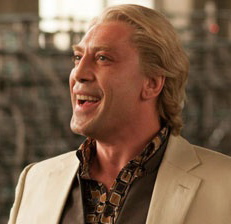 SILVA!
Beginner’s luck, or was it the fake teeth? Yeah, I think I’ll go with the latter on this one.
Who cares if he could have killed M in the first ten minutes? Who cares if he could have killed M in the last ten minutes? Those are classic Bond villain moves. And even with 50 years’ worth of competition before him, is it really that surprising that Bardem was this good? No, friend-o. No it was not.
Swell voting, folks! Y’all know your stuff.
RESULTS:
– Silva: 22 votes
– Jaws: 18 votes
– Max Zorin: 10 votes (thoughts on A View to a Kill, folks?)
– Le Chiffre: 10 votes (easily the best torturer of the lot)
– Blofeld: 7 votes
– Scaramanga: 4 votes (that dastardly third nipple…)
– Oddjob: 3 votes (if you’ve ever played GoldenEye, this might make your day)
– Dr. No: 3 votes
– Goldfinger: 3 votes
– 006: 3 votes (really thought he’d get more than that)
– Nick Nack: 1 vote
– Mr. Big: 1 vote (did have a pretty gnarly death scene though)
– Red Grant: 0 votes
– Elektra King: 1 write-in vote (totally forgot about her)
– “Baron Samedi, but to be honest, it’s only ’cause I loved to be him in GoldenEye“: 1 write-in vote (you and me both, man)
Life of Pi (2012)
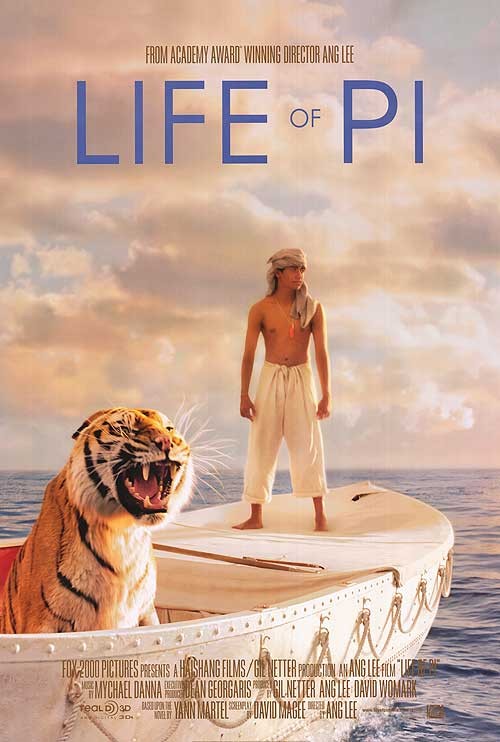 VERDICT:
8/10 Cat Whisperers
More adaptations like this, please.
Life of Pi is the story of a young boy growing up in India with his brother, his parents, and their zoo full of animals. Along the way, he falls for a girl, discovers himself, and finds God through Christianity, Hinduism, and Islam. As unusual as it may be, life is pretty good for Pi, that is until his family decides to uproot their life in India to begin a new one in the hockey capital of the world: Canada, eh! Despite Pi’s objections and poor skating abilities, they pack up the animals, get on a ship, and sail across Pacific. As fate would have it, their ship hits a storm, their ship up and capsizes, and next thing he knows, Pi’s on a life boat as the ship’s sole survivor. Once the storm settles, he wakes up to find that he’s not alone. Turns out Richard Parker somehow made it on board, too. As you’ve probably already guessed, Richard Parker’s that Bengal tiger. Suddenly, Canada sounds awesome. As one can imagine, their relationship gets off to a real rocky start, but with both of them in the same boat (HI-OH!), they learn to get along and help each other survive.
When it comes to the book, I love Life of Pi. I hate to admit this, I truly do, but there were times when I would have to sneak into the bathroom at work to read an extra chapter because waiting ’til 5:00 just wasn’t gonna happen for me. I have never done that with a book, but during the week or so that I was reading it, it was all I could freaking think about. I guess that’s why every time I’m asked for a reading suggestion, the answer is always “Life of Pi.” Which, naturally, leads to the question, “Well, what’s it about?” At which point I explain it to the best of my abilities and smile extra hard because this is where things inevitably go South. Then, whaddaya know, they look at me like I told them I just contracted leprosy. Happens every time, but I just can’t help myself. It’s an incredible story, incredibly well-told by Yann Martel, and one of the most utterly original things I’ve ever had the pleasure of reading.
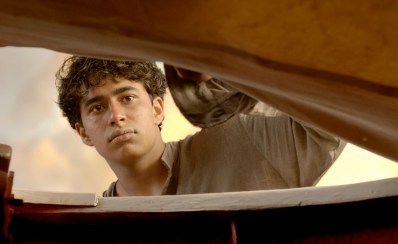
Still, I can see where they’re coming from.
From the outset, this is one unrealistic and totally ridiculous survival story. It’s the kind of story one could imagine ending by page ten with Richard Parker floating along, enjoying his last delicious piece of Pi. And since (surprise!) that doesn’t happen, further explanation of what does in fact happen only serves to either intrigue or confuse. And in my experience, confusion reigns. Like I said: great book, hard sell. But lucky for us, Ang Lee must have been awfully, awfully intrigued.
All the same, it’s a bit weird to me that he made this movie at all. Over a decade has passed since the novel hit shelves, and since no one adapted it at the height of its popularity, I just figured it wouldn’t get made, period. But regardless of how much time has passed or why on Earth it came together now, the fact of the matter is that this is no easy story to adapt in the first place. It’s a boy and a tiger alone on a boat for several hundred pages. Not a lot happens, and when things finally do start happening, they can get pretty damn surreal to say the least. But that’s the beauty of Life of Pi and the medium in which it originated. It works wonderfully as a novel because books afford their authors a creative blank slate to work with. Due to things like script structuring, budget costs, and time restraints, film does not provide that same luxury. As a result, the surreal, unusual nature of this story is what makes both the book so magical and the potential of an adaptation that much harder to envision.
Yet it works.

Back when I first read the book, I vividly remember trying to picture the ways it could translate to film. The thing is, outside of their efforts to keep themselves fed, there ain’t that much happening after Pi and Dick’s ship goes down. A big reason why that didn’t matter is due to Yann Martel’s gifts as a writer. On top of that, a great deal of the story Pi tells is comprised of introspection, of the things that were going through his head while he was alone with only his thoughts and a hungry-ass tiger. It’s also a surprisingly grisly story that refuses to sugarcoat what people are capable of when their options have run out. Not that any of this would make the notion of a movie an unfeasible undertaking, but towards the end, when things start happening, “unfeasible” seemed about right. Sure, it could be filmed, it’s just that I couldn’t imagine this one scene towards the end flying with already-skeptical moviegoers. If you’re familiar with the book, you probably know what I’m talking about.
Yet it works.
You know, it really is pretty amazing what Ang Lee and screenwriter David Magee manage to accomplish here. They had a difficult, beloved story to work with, and they truly made it their own while capturing the things that made it magical to begin with. Granted, it’s been a good three years since last read Life of Pi, so my memories of what made it so magical aren’t as vivid as they once were. Had every intention of amending that situation last month, but Anna Karenina saw fit to make sure that definitely wasn’t happening. And as it just so happens, that three year buffer made this experience all the better.
I fondly remembered the big picture of Pi’s life, but I’d forgotten the details along with some of the qualities that made Pi such an enthralling storyteller and protagonist. I’d completely forgotten the role that his faith played in his life, I’d completely forgotten most everything that occurred before the shipwreck. So with such a fuzzy memory going in, it was almost like hearing one of my favorite stories for the first time. And even with my already fond affection towards the novel, it was actually wonderful to have such a small base for comparison.

As you may have heard, the visuals in this movie are astonishing, and I’m happy to report that you can believe the hype. I don’t usually shell out the extra cash for 3D, but, boy howdy, was that a worthwhile investment. Folks, this movie is picturesque, the quality of which you’d expect to find in a freaking gallery. Many a scene left me with my mouth agape and pinching myself to make sure no slipped some E into my Raisinets, and since raving ’til dawn was never my thing, you can believe this sensation was quite the hefty trip. I couldn’t have imagined a more inspired and beautiful way for Lee to fill in the missing the pieces and make this story feel brand new, but, alas, writing about it just doesn’t cut it. Trust the trailer, gang.
But did anyone notice the way certain scenes suddenly switched to a letterboxed aspect ratio then back to normal when it was over? I hope I’m not the only one who noticed that, or else that probably was E in my Raisinets.
At any rate, the visuals aren’t even the best part. The greatest thing that Lee and Magee (great name for a country band, just saying) pull off is that they succeed in making this story as compelling as it is. It is not boring, it is not Castaway with zoo animals. It is engaging from start to finish, and that’s the way it should be. Not only that, but the dynamic and relationship between Pi and Richard Parker is completely convincing from beginning to end, and it never seems weird that the protagonist of our story is stuck on a boat with a Bengal tiger. Might sound crazy, but I kid you not. And if any of you are wondering, no, the tiger doesn’t speak. There is no such thing as a stupid question, and, hey, it’s just that kind of story. Hell, I read the entire book waiting for Richard Parker to speak up.
And while I imagined a younger actor in the role, Suraj Sharma does a really fine job as Pi. Like much of the dialogue he has to work with, his performance gets a tad overenthusiastic at times, but he owns it and that goes a long way. Too bad Gerard Depardieu didn’t have a bigger role, although there isn’t much anyone could have done about that either.

Now, hopefully this review helped my case some, because here goes nothing…
If you’re looking for a great book and you haven’t read Life of Pi, seriously, go read Life of Pi. It’s a true original, it’s one of the all-time greats, and one of the most unforgettable tales about the will of man and the stories we tell. Life is short, take a chance, you’ll be glad you did, you’re welcome. But whether you decide to read it or continue to laugh maniacally at my petty efforts, watching Life is Pi ain’t a bad call either. It’s great in a lot of the same ways the book is, and great in ways that are wholly its own. Its decision to have Pi tell his story to a struggling writer in addition to the ship’s insurance agents strikes me as somewhat redundant, but, man, that is one small fry non-complaint in respect to everything else that’s so fantastic about this. All in all, Life of Pi does justice and then some to the book that inspired it, and with a tall order like this, what else can you really ask for?
Compliance (2012)
 VERDICT:
2/10 Cold Callers
Totally effed up and totally ridiculous.
Compliance is about the timid manager of a fast food restaurant who comes into work to find chaos as usual. Someone left the supply fridge open, employees are missing in action – just a bad way to start off an already busy day. As if that weren’t enough, her phone starts ringing and guess who it is! A gosh. darn. cop. Apparently, one of the manager’s girls at the register is being accused of stealing a customer’s money. The said customer went to the cop, the cop says he has it on tape, thus prompting a criminal investigation into the matter. Though the girl denies all wrongdoing, her manager nonetheless feels compelled to help the officer in any way possible. So she brings the girl into her office and starts obeying his suspect orders…
If you’re at all familiar with the Bullitt county McDonald’s incident (and if not, that link might just spoil the movie for ya’), then you, my friend, are already well aware of what we’re dealing with. I, for one, was completely unfamiliar with it and was sold on the premise right quick. “Someone who may or may not be a cop uses his ‘authority’ to have his way with this unwitting staff of fry cooks.” I don’t know about you, but that sounded pretty wild. Just like that, I wanted to know his identity, I wanted to know his motive, and since I had no idea how this would all play out, I couldn’t help but wonder how long it would take before someone called “bullshit.” Again, completely clueless about the events that inspired it. And, heck, you can only trust that “INSPIRED BY TRUE EVENTS” tagline so much these days.

Turns out, it’s pretty damn far from fiction.
I think the reason I was so intrigued by Compliance from the outset is that it left me wondering and it felt plausible. Folks, there are some seriously nasty mofos out there who get off on this noise on the regular. Just the other week I heard a story about my friend’s grandmother who got a call from some guy claiming to be her grandson. Lo and behold, he tried to get a thousand bucks worth of bail money off her because he claimed to broke and locked up in a Mexican prison. Luckily she called “bullshit” before things went any further, but as hard as it is to believe this scam works, there’s a reason they’re making these calls. Even scumbags gotta earn their coffee.
But this? This is something else. This, ladies and gentlemen, is warped.
Now, you figure in a real-life scenario like this, there can only be two logical explanations for how things got so far. A) The people at that McDonald’s must have been gullible as all hell and/or certified sociopaths; or, B) The dude they were talking to was a master of deception. Granted, column B can’t work without some help from column A, but from where I’m sitting, all signs point to column B. Let’s be clear, I’m no expert on the matter, but if this adaptation had played out in the way I’m guessing it did at McDonald’s, I can bet you that Verdict would be a whole lot higher. “If” being the optimal word.
With that being said, Compliance‘s downfall is a tricky one to explain because we’re essentially dealing with two stories: one that’s fact, and one that’s fiction piggybacking off of fact. And while both reach equal levels of astronomically crazy, one is clearly more effective than the other. Thinking you can guess which one I’m talking about.

The reason Compliance is so disturbing is because, to a degree, you can’t dismiss it as being unrealistic no matter how much you might wish to. However, the only things we can confirm in it are the things that are backed up by facts. What can’t be confirmed are the steps and conversations that led to the said facts. This is where writer/director Craig Zobel steps in to envision for us how it all went down. And in regards to how the plot escalates and how the caller keeps manipulating these people until they’re sitting in his lap, well, that’s where the bullshit comes in.
Even if I hadn’t seen the trailer, even if this were the first movie I’d ever effing watched, there is no way I’d buy the shit these people are being fed. The reason for that lies with the way Zobel envisions how his inspiration went down.
To his credit, Zobel’s hurdle was a tall one to clear. I mean, how the hell could something like this happen? It baffles the mind and one can only assume how such a perfect storm of coercion could have gotten pulled off. Man, whatever that guy said those people in real life must have been convincing as all hell to get them to do what they did. But this guy? Zobel’s guy? Give me a fucking break.
While quick on his feet and initially convincing, this dude is by no means a master of deception. His foolproof plan consists of throwing his “authority” around, using personal information as leverage (personal information that was provided way too easily to him by his victims), and getting lucky enough to find the biggest ignoramuses in the history of fast food. Whenever someone starts to get suspicious, he inevitably pulls the “I’M A COP!” card, quashes that shit right quick, and keeps them on the line indefinitely. And, lucky him, it works every time. On the one hand, I can absolutely appreciate the power of authority, fabricated or otherwise, and how it would work like gangbusters in getting people to at least listen or even run some errands. You can bet your ass I would have listened.
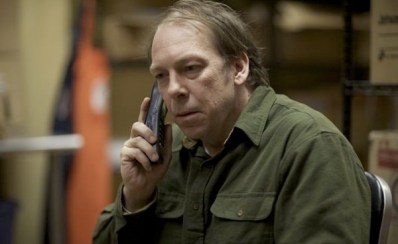
But even if the girl in question can’t afford to lose her job, even if the manager is a push-over, and even if her fiancee has had a couple beers, it’s absurd the way they blindly follow his lead and “handle” this situation, hook, line, and sinker. Even worse is when someone does try to speak up about this bizarro investigation, the manager just shoots them down without fail and in ways highly unbecoming of a human/fast food regional branch manager. And even though Zobel does a good job of creating every scenario imaginable so that everyone involved is either distracted, unmonitored, or all-too complacent at all times, it’s still a total stretch. I feel like the kinds of people who would fall for the tactics that Zobel gives his ultimate prankster are either too young to know what “stranger danger” is or are enjoying retirement down in Del Boca Vista. These are adults we’re dealing with, and no adult with half a brain would submit to this dude or his demands without question. As a result, the whole damn thing just comes off like one big excuse to watch a girl get victimized. Good times.
Though I’m well aware that I’m not speaking from experience and can’t say for certain what I would have done in their shoes, I am 99.99% certain that I would have hung up way early on in Zobel’s “what if…” version of events. Man, if you’re not convincing your audience that that your cop is a cop, then why on Earth should we believe that these poor folks would?
In fact, watching this brought up a lot of the same emotions as when I watched Trust last year. Both stories are believable because they’re grounded in reality, but it’s still hard for me to fathom that someone with a shred of common sense could be so easily exploited with so many red flags in front of them. As much as I feel awful for the victims in these movies, it’s far more frustrating than anything else to watch them submit to those pulling the strings.

Really just a miserable viewing experience in general that I came this close to turning off by the last half-hour. And to be honest, I wish I had.
But regardless of how it’s portrayed and how it’s closely based on actual events, it wasn’t long before I realized that Compliance isn’t a movie that needed making. Not saying it’s a bad movie or that it isn’t without its merits, it’s just that, from a moral standpoint, it’s borderline reprehensible. Even if it were a work of pure fiction, it’s still on par with torture porn. But being that it isn’t, it makes me wonder what it was about this story that made Zobel want to adapt it? Sure, it’s an unbelievable story, but for all the wrong reasons – the ones that’ll question your faith in humanity. Maybe if the players had been more convincing, I’d be singing a different tune. But the fact of the matter is that there’s still some poor girl out there who actually had to go through this, and I don’t see what’s to be gained by shining a spotlight on her and her victimizers here. Perhaps it’s telling me to not be so gullible? Perhaps it’s telling me to not be so naive? Whatever it is that I was supposed to take away from this, it’s the worst PSA I’ve ever seen. Something tells me I’m being generous with that statement.
If you’re the kind of person who likes pulling the wings off of flies or, I don’t know, thinks Ted Kaczynski and snuff porn get a bad rap, then consider yourself vindicated, Compliance has arrived. Can’t blame Zobel for the things that happened, but sure can blame him for putting them to film.
Guess I’m calling “bullshit” on this one.
Lincoln (2012)
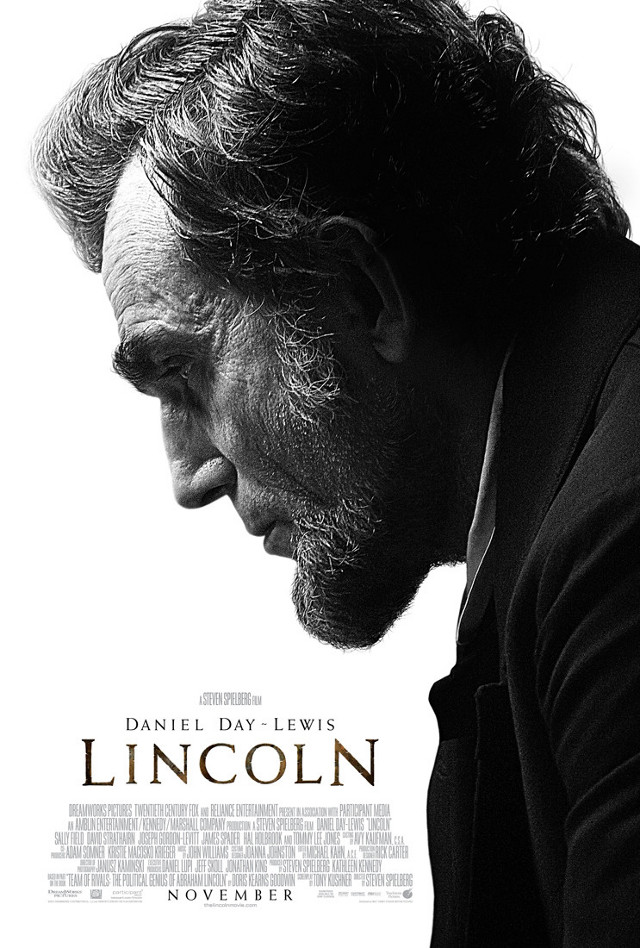 VERDICT:
8/10 Vampire Hunters
Dude’s got my vote.
Set three years into the Civil War and a few months after Abe’s re-election, Lincoln is about the 16th President’s efforts to abolish slavery once and for all by passing the 13th Amendment through the House of Representatives. With the House divided and the numbers stacked against him, he starts calling in favors and working his magic to obtain the necessary votes, all while juggling his family life behind closed doors.
As much as I love Thanksgiving and as glorious as last week was, holy-effing-hell, were folks chomping at the bit to hear what I thought about Lincoln. It hadn’t even been out a week, I still hadn’t seen it, and by the 16th time the question got asked, it had taken on a life of its own. Strangers were asking me about it, toddlers were asking me about it, and it wasn’t until priests started asking me about it (after which they felt adorably guilty) that I realized I was being punk’d. If it hadn’t been for all that turkey, pie, and beer in my system, I probably would have been bitter about it, too. But alas, such is life when you’re “the movie guy” at family gatherings.
So, 12 hours later, revived from my food coma, I headed off to the movies for what had suddenly become an urgent obligation. Certainly not the worst thing to feel pressured into doing, and it’s not like I was baffled as to why everyone kept asking the question. After all, it’s Abe Lincoln, it’s Daniel-Day Lewis, it’s Steven Spielberg, and it’s Oscar season. This is the kind of movie people wait all year for, and one with an awfully broad audience to boot.
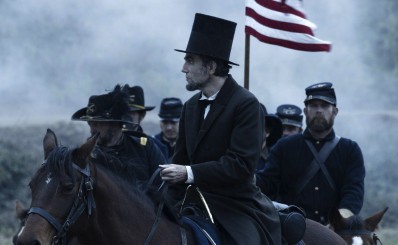
And of the three fellows in question, the biggest seller for me was far and away the first. As great as they (almost) always are, DDL and Speilberg have been commonplace figures in my life – individuals whose contributions and achievements have been hard to ignore, especially since I like movies. But as for Lincoln, well, let’s just say I’m up on the highlights at best. As I’ve already explained in humiliating detail this week, I’m not what you’d call a history buff. Ain’t too much non-fiction on the shelf, and with the exception of my seventh-grade history teacher who was really into The Civil War, the extent of my knowledge of this period in American history has more or less been taught to me by Ken Burns and Michael Shaara. And as handy as I may be when there’s a “Civil War” category on Jeopardy!, I’d be pretty darn useless if it happened to be on “Lincoln.” For chrissakes, I didn’t even know his wife was nuts until Louis C.K. made a skit out of it. Yup, I really need to read Team of Rivals already.
Anyways, it was nice to get caught up in the meantime.
For starters, it was fascinating to get a fuller picture of Lincoln’s personal life as a husband and a father. Given the office that he held and all that he accomplished, it’s almost alien to think of him as anything other than the larger-than-life individual that I’ve come to know through textbooks. And I liked that so much focus was placed on his estranged relationship with his eldest son, his strong relationship with his youngest son, and the strains that his responsibilities to the nation places on his responsibilities to his marriage. It makes him feel like the person he was rather than the President we remember, and it adds to his role as Commander in Chief.

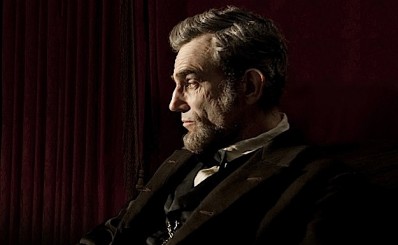
Not only that, but it was fascinating to watch him come to life like this. I mean, I have no idea how they made Daniel Day-Lewis look so damn tall, nor can I venture a guess as to how he managed to walk with such a convincing, lumbering gait. But even considering that I had no prior knowledge of what Lincoln sounded like, talked about, or was passionate about aside from abolitionism and killer beards, DDL makes a pretty convincing Lincoln. It’s his level-headed nature that prefers discussion over debate, a nature that’s made infectious thanks to his soothing “indoor voice” that only reaches its breaking point when he does, which is rare. And at the risk of making the nerdiest comparison one could possibly imagine, it’s a lot like the way Admiral Adama talked. Now that mother effer could lead!
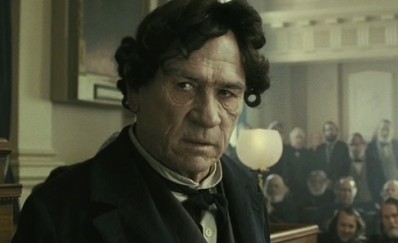
There’s a lot about Lincoln that’s easy to like and a lot about Lincoln that can drive a story. But at the end of the day, this is Daniel Day-Lewis we’re dealing with, and that really says it all. The difference between his performance and that of Tommy Lee Jones’ is that, while both are exceptional as Lincoln and Thaddeus Stevens, respectively, DDL becomes his role and TLJ is still TLJ. Regardless, they’re both shoo-ins for Oscar noms, and as much as I can heap more praise upon DDL, I gotta say that I am all about the return of TLJ these days. As long as he keeps on stealing scenes and doing his thing like he did in this and Captain America, I will keep on buying tickets. Not to mention that there is an absolute orgy of A-listers cast in side roles and cameos here. For brevity’s sake I won’t list ’em all, but they’re all good and it’s a constant pleasure seeing who’ll pop up next in a puffy shirt and top hate. Although special mentions are in order for what might be my favorite performance of James Spader’s career, and Jackie Earle Haley as that slave-owning su’mbitch Alexander Stephens. Oh, and Sally Field of course. Girl gets it done.
However, there was one thing about Abe that wasn’t so initially likable: apparently the dude really liked telling stories. As a result, every time Lincoln in a room full of bureaucrats – or anyone for that matter – without fail, as soon as things get heated, he’ll chime in and shut ’em up with some lengthy non-sequitur about some semi-unrelated story he once heard back in the day from his dear old pappy. Maybe it’s just me, but I just have an issue with people who can’t help but speak in allusions. It’s like the world is their stage, and we’re forced to be their audience. Serenity now. With that being said, it gets old kind of fast, that is until D-Day calls him out on it and I came to the realization that it’s less a matter of Lincoln loving stories as it is a tactic he used to calm those around him. And with that epiphany gained, he went right back to being the most likable guy in office. Plus, they were some pretty good stories.
I really thought I’d have more to gripe about with this one (not that I get excited about griping over shit), because under someone else’s direction, this could have been a struggle. I’m talking two-and-a-half hours of talking heads, a microscopic amount of action thats over by minute two, and politicians wheeling and dealing until they all vote on something that we already know the outcome of. Going out on a limb here and assuming that last bit wasn’t a spoiler. Really hope it wasn’t, but if it is, this might be the best damn movie you’ve ever seen. Hell, I was short of breath at that voting scene. All the same, it’s not boring in the slightest, it’s surprisingly compelling in fact, and it’s further proof that Spielberg can pull off small-scale with the same panache as his large-scale efforts. In terms of subject matter, structure, and tone, it might not be all that surprising to find that this is very similar to Amistad either. And while it always strikes me as a bit odd to paint a portrait of an individual by focusing on an isolated period in their lives, it’s an effective portrait nonetheless that benefits greatly from a solid balance of drama, heart, and much-needed humor. Just a solid movie all around, really.
Just hoping I’ll be able to say the same about this upcoming Hitchock/Psycho biopic.
It’s still weird to me that it took so long for this biopic to get made, or at the very least get the mini-series treatment a la’ John Adams. But by the same token, that doesn’t really matter given the timeless life story that is Abraham Lincoln’s. Aside from being a well-made, well-acted film, Lincoln is a great slice of American history, of a time when good men did the right thing even if it wasn’t popular, even if it cost people their lives. Further more, it’s a time capsule, a reminder of how things have changed over the years and how we’ve grown/strayed as a people. For instance, Lincoln was a Republican, and it was his party than had to win over votes from the Democrats…to abolish slavery. The House of Representatives looked more the UK’s Parliament, and though it was as divided then as it is today, compromise ultimately prevailed and history was made in the process. Oh lord, how times have changed.
But make no mistake, Lincoln is not a politically biased movie, and if there’s any debate about that, consider that this easily could have hit theaters in October. It is a bipartisan movie about bipartisan politics (albeit begrudgingly bipartisan), and with things at such a standstill in the House these days, it’ll certainly make you long for more from our Senators.
Man oh man, where’s Lincoln when you need him?
Wreck-It Ralph (2012)
 VERDICT:
4/10 Hard Resets
If this is how Disney’s treating the things I hold dear, lord almighty, do I fear for Star Wars.
Wreck-It Ralph is about the bad guy in a video game called Fix-It Felix, Jr. Quarter in and quarter out, Ralph spends his days wrecking a building so that the good guy, Felix, can come in to fix the damage and thus save the building’s residents. For a while there it was all fun and games, but after 30 years of getting chucked off a roof, Ralph has just about had it. He wants to be the good guy for a change, but since that ain’t gonna happen with things the way they are, he decides to start “game jumping” to prove the haters wrong. For those unaware of arcade bylaws, jumping to a game outside of your own is no bueno. As a result, Fix-It Felix, Jr. starts game jumping himself in the hopes of bringing Ralph back before their game gets scrapped.
Folks, I know how you’re feeling. I can already smell the backlash coming my way from that Verdict up yonder, and, believe me, I get it. I wish I had a better review to give ya’, and no matter how many times I look at it, that Verdict straight-up saddens me. Because of all the movies I’ve been looking forward to this year, Wreck-It Ralph was in the top two, right behind Django Unchained (couldn’t quite top our very first “Southern”). As a child of the ’80s, as a lifelong gamer, and as someone who’s seen so many of his favorite games get bastardized by film makers time and time again, Wreck-It Ralph looked like a turning point. “This could be it,” I thought, “the day gamers started making movies. This could change everything!” It was a beautiful thing, guys. Almost brought me to tears.

After all, the signs were all right there in the trailer. A protagonist named Wreck-It Ralph who might as well be the human version of Donkey Kong; Ralph sitting in a support group with Doctor Robotnik and Zangief (who’s kind of a push as far as bad guys go); and, bridging the generational gap, Ralph running around in a trigger-happy knock-off of Call of Duty-meets-StarCraft. It was a trailer after my own heart, and everything about it left me with the impression that it was finally the movie I’d been waiting for: a video game movie for gamers, by gamers.
Here’s what I ended up getting: a video game movie for gamers – who, due to their young ages, don’t have the mental capacity or motor skills to master any game outside of Wii Bowling – by gamers who stopped playing video games once things started evolving past Pong. Apologies for harshing anyone’s mellow with that statement, but references and all, inspired as it may be, Wreck-It Ralph is a ruse.
Although it does start off promising.
From the brief appearance of Metal Gear Solid‘s exclamation point, to Ken and Ryu grabbing a beer at Tapper‘s, I loved all the tongue-in-cheek nods to gaming lore that are jammed into the first half of this movie. If you’re out of the loop, it might seem overwhelming, and even if you’re in it, it gets overwhelming regardless. Still, at first introduction, it’s an instantly likable and convincing digital world with characters who’ve never seemed more alive and look so much better than I ever expected they could. The true-to-form character models of our leads, the way retro characters move and speak the way their 8-bit selves should – it’s all fantastic. Unfortunately, it’s also the silver lining. Well, that and Sarah Silverman’s voice acting.
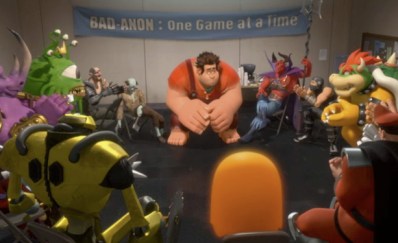
Now, I’ve got me some problems with Wreck-It Ralph, and I’ll segue on over to ’em when the time is right. But the cardinal sin of Wreck-It Ralph that I haven’t been able to get past is that it’s far less a celebration and criticism of everything I’ve grown to love (and hate) about video games, and far more a vehicle to shill Disney merch to pint-sized Ritalin-junkies who don’t know any better. For example…
The first half of the movie takes place in a very recognizable video game world featuring very recognizable video game staples. It makes for a great transition from the family-friendly, retro world of Fix-It Felix, Jr. to the uber-violent, modern-day world of Hero’s Duty. For better or worse, video games have completely changed over the years, and if that very fact had been a focal point in the plot rather than an occasional punchline, it could have made for something great. Instead, the second half starts up and we’re transported to the world of Sugar Rush: a fictional kart-racing game that’s essentially set in Candy Land. Yeah, kart racing is a classic gaming genre and one that certainly deserves a shout-out in a movie like this, but the formula hasn’t changed a lick over the years and, from a gamer’s perspective, Sugar Rush is unrecognizable. Aside from maybe Twisted Metal, there’s never been much to take away from racing games of any kind outside of the best spots on the track to place bananas.
It’s a really weird transition from a genre like first-person shooters that’s chock full of talking points to one that’s as one-dimensional as they come. But, more importantly, what the hell does Candy Land have to do with video games? The only answer I can think of: kids. And on that note, here’s my thinking on how this movie came together:
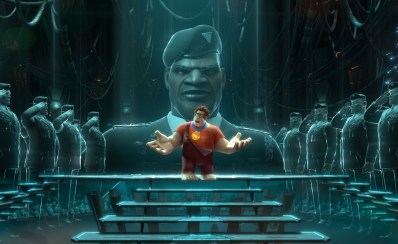
The creative minds at Disney didn’t know what to do with themselves after Cars 2, so they evicted all their writers from the boonies of Epcot and got a crack team together to figure out what kids like. The geniuses on site came up with two things: video games and candy. Since no one there knows shit about video games, someone brings their teenage son in on the conversation, tell him they need his gaming expertise to make it authentic. He runs off some titles and points ’em in the right direction so they won’t look like complete noobs, then he finds out about the candy part and winds up dead in a ditch for his objections. With that taken care of, they put together a focus group of eight-year-olds, hop ’em up on Pixy Stix, and let them finish off the script. 10 boxes of half-eaten crayons later, and viola, Wreck-It Ralph is born.
For me, this explains everything. It explains the cringe-worthy training montage set to Rihanna of all people. It explains the shitty writing that’s so focused on pandering to the kiddies that it completely forgets the rest of us. It explains the ridiculously juvenile sense of humor that comes with realizing that “duty” sounds exactly like “doody,” that homeless people are an easy bunch to make fun of, and that when they sing that “Oh Wee Oh” song in The Wizard of Oz, it totally sounds like they’re saying “Or-e-o.” Dude, every kid who’s ever seen The Wizard of Oz has been making that “joke” since 1938. And why are we referencing The Wizard of Oz?!?! Dammit, kids!
It also explains the overwhelming sensation that, though this is set in a video game world, the only knowledge it has of the medium has been gained through fringe interactions. In gamer terms, it talks a good game, can probably pull off hadoukens like it’s nobody’s business, but it isn’t long before you realize that that’s all it can do. It is a poser, and when it’s time to walk the talk, posers are the first to go.

But at least its message is a good one. Kids, do as Ralph does and be whoever you want to be, and don’t let who you are be determined by anyone or anything other than yourself. I’m all for that, and Ralph gets it across. However, all these nerdy complaints of mine would be completely null and void if Ralph’s story had been at all special to begin with. I really didn’t care about the guy, I didn’t care about anyone he met along the way, and there wasn’t anything new about his development that kept me invested in his journey. I was just crap out of luck with this one, man.
So with all that off my chest, I’m guessing you’ve already written me off as the most heartless bastard this side of Billy Mitchell. I swear I’m usually much nicer, but this is one I just can’t sugarcoat. I’m so disappointed in the movie this devolved into, the emotional connection was microscopic, and I just didn’t enjoy it as a gamer or a viewer. And with a movie like Wreck-It Ralph, isn’t that the whole point? Ugh. I really wish I could lighten up about it, but when you’ve got studios out there like Pixar delivering gold on the regular, it’s not like I can brush this off and say I wasn’t the target audience. Good lord, I am the target audience, and for that matter, maybe that’s why I’m so critical of it. Wreck-It Ralph had the potential for greatness, yet squandered it for the sake of shilling. I mean, look at the Toy Story movies. One of the many great things about that series is the way it integrated real-life toys and childhood memorabilia without coming off like some shameless marketing ploy. They were so much fun and about so much more than toys, whereas this was a borderline chore that was all about the sweet, sweet CANDY! Because, lest we forget, kids love candy.
As much as I wish I wasn’t, I know I’m in the minority, and as much as I can respect why others might like it, I can’t help but feel a sucker. And what a crappy feeling that is.
At least Paperman was fantastic.
Argo (2012)
 VERDICT:
9/10 Canadian Capers
Give it on up for Affleck, and give it on up for those Canucks.
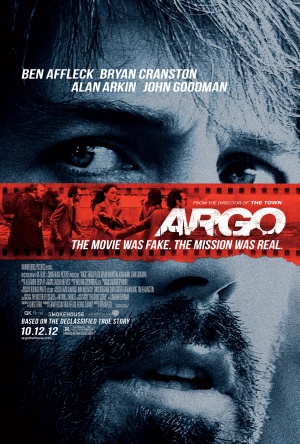
Based on a true story that was declassified by the US government nearly 20 years after it occurred, Argo takes place amidst the Iran hostage crisis of 1979. Though Wikipedia can explain it in far better detail than I, the Cliffs Notes version is that the US government decided to harbor Iran’s former Shah (who was a very bad dude), so a group of Iranian militants retaliated by storming the US embassy in Tehran and taking 52 Americans hostage. Unbeknownst to the Iranians, six American diplomats managed to flee the site and take shelter with the Canadian embassy before things hit the fan. While certainly better than winding up a hostage, they’re nonetheless stranded in Iran with the militants hot on their tails. So back in the US of A, the CIA starts cooking up ideas for a rescue operation. Lo and behold, all their ideas stink, even the ones that have worked like gangbusters in the past. That is until a CIA specialist named Tony Mendez busts in and pitches the most stonerific idea yet: stage a fake sci-fi movie, disguise the Americans as a Canadian film crew scouting locations, and then fly them on outta there lickety split. Since no one else has a better idea, Mendez gets the go-ahead and tries to pull the gig off without getting himself or anyone else killed, or, you know, starting an all-out war.
First off, this story went public 15 years ago. How in the hell did it take 15 years for this movie to get made? Glad someone finally got the memo and passed the buck onto Affleck, but good lord, that’s a long time to be twiddling your thumbs over such a wild story that only a select few people actually knew about. I mean, for all the movies that claim they’re “based on a true story,” it’s always something special to find one we’ve never heard before, especially when you’re dealing with such a high-profile historical conflict. Talk about a no-brainer, man. We Americans live for this stuff!

What’s even more interesting/utterly humiliating is that I was generally/entirely unfamiliar with the Iran hostage crisis prior to seeing this movie. No, history was never my strong suit, but that’s really no excuse, is it? Even worse is that instead of doing some research on this beforehand, my brain decided to convince itself that this was in fact based on the Munich massacre – another event which I clearly had a tragic misunderstanding of. Yeah, definitely not my proudest moment as a member of the human race, but, oddly enough, there was a silver lining to this regrettable situation. Thanks to my fuzzy/non-existent memory, not only was I that much more fascinated by the knowledge being dropped upon me, but I had absolutely no idea as to how it would all play out. Maybe they’ll make it, maybe they won’t – who knows?! For all I knew, it could be another Munich massacre…which would be the worst ending imaginable.
But misinformation aside, the story behind Argo is one that’s tailor made for the movies. Lives are on the line, time is running out, and the only chance of success rests on a plan that I probably wouldn’t get my hopes up for. But you have to because it’s just. gotta. WORK! Plus, it actually-freaking-happened. That’s the kind of story that will always put asses in seats. And while part of me felt confused as to how it wound up on Affleck’s lap, the fact of the matter is that Ben’s come a long way since his Gigli days. Say what you will about his acting career, but the dude’s been batting a thousand in the writing/directing department. And regardless of what you just said about his acting career, Ben’s pretty good here. Sure, he probably could have given his “serious face” a much-needed break; sure, he gets outshines by his supporting cast; and, sure, he’s the one actor in the entire cast who isn’t a dead ringer for their real-life counterpart. But even with that all taken into account, he’s solid, he gets it done, and he carries his movie without getting in the way of its driving force: the story.
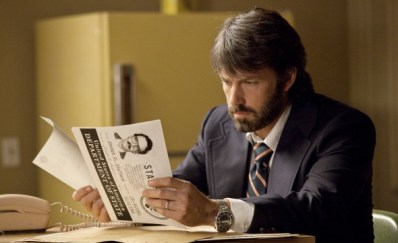
All in all, it’s just a really easy movie to get drawn into. It moves at an incredibly strong clip that only gets faster as the clock winds down, the dialogue is as engaging as it is hilarious, and everyone’s at the top of their game. It’s the best thing John Goodman’s done in a while, it’s the best thing Alan Arkin’s done in years, and if Breaking Bad wasn’t so goddamn phenomenal, I could easily say the same for Bryan Cranston. Lots of good chemistry here, especially among Goodman, Arkin, and Affleck. Not to mention it has a great eye for detail in respect to capturing the state and appearances of Tehran and Los Angeles in the late ’70s/early ’80s. Shows a real respect for both the source material and the gravity of the situation.
And, interestingly enough, a lot of the things that work with Argo are the same things that worked with The Town. Really sharp dialogue, a compelling story, and a memorable lineup of some bonafide smooth operators that are all brought to life by some top-notch actors. The one big difference is that, not counting those nun costumes and the infamy of Charlestown, there wasn’t much about The Town’s story that separated it from every other heist movie that came before it. As you can probably guess, that’s kind of a non-issue with Argo. Only other movie I can think of that’s even remotely similar is this The Last Shot, and that was straight fiction…and no one really saw it.
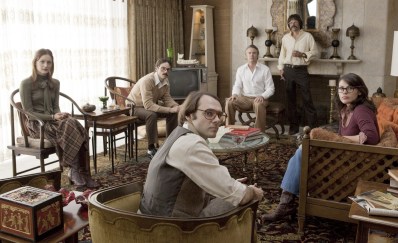
The only semi-detractor for me is that when it comes to the final Act, the events in this story feel far more “Hollywoodized” than they probably were in real life. Folks, you will not believe how many nick-of-time close calls they manage to cram into a 30-minute span here. It borders on ridiculous, and for anyone out there who didn’t dig Argo (yes, they do exist), I’m guessing this is the reason why. Granted, I haven’t done my research, and I have no base for comparison as to how things actually went down. However, there’s no effing way they went down like this. Talk about some good timing.
On any other day, this one gripe could tarnish the whole thing. After two Acts that are fueled by what seems like a commitment to authenticity and a believable sense of high stakes urgency, we’re treated to a finale that’s puts the rush above all. But as nitpicky as I can be in hindsight, I truly didn’t care in the moment. These things are generally hard to notice when you’re too busy reminding yourself to breathe. Kids, that third Act is a thrill ride for the ages that’ll make even the snobbiest of snobs bite their nails down to the nubbin. It’s really well structured, the good timing doesn’t feel as awfully convenient as it very well could have, and it’s so easy to overlook considering how invested I was in seeing that mission get accomplished.

On that note, however, the only other semi-detractor, or rather double-edged sword, that I can think of is that for everything it pulls off so well, Argo is a movie on a mission, one that doesn’t leave much room for the deeper things in life. It lays out a problem, lays out a solution, and spends the rest of the movie putting said solution to the test. It’s a simple formula with a simple goal, and though it tries for something more there right at the very end, it doesn’t quite hit home in the way it does on a surface level. But once again, that’s okay. At the very least, it’s a good story about what countries can do when they work together. This is a movie that plays to its strengths, and in turn, its strengths overshadow its shortcomings handily. I mean, honestly, who needs deeper meanings when you’ve got Affleck’s sweet beard to stare at? Can I get an Amen!
Anyway, I’m sure it helped not knowing how things would end, and I’m sure it helped being wildly uneducated on the events that inspired this. I guess we’ll never know how I would have felt about this movie had I done my homework like a good blogger should, but all I know is that, for once, I’m glad I didn’t. I can’t remember the last time I’ve had the pleasure of recommending a movie so willy-nilly to people without the slightest fear of negative repercussions. True, these things are never a guarantee, but I sure dug Argo, and, boy, is there a lot to dig.
The Invisible War (2012)
 VERDICT:
10/10 Dishonorable Conducts
Talk about your all-time wake-up calls.
The Invisible War is a documentary about the United States Military and its deplorable history of handling, or rather not handling, reports of rape perpetrated by and against its male and female soldiers.
Man, it’s hard to know where to begin with this one, because after a certain point, all the infuriation just starts to congeal. As you can very well imagine, this one’s out to boil some blood, and by the first five minutes, it achieves its aims with ease. No, this is not an easy pill to swallow, nor is it the best option for date night, but at the end of the day, it’s a pill we need to take, and we’ll all be better for it.
But before I go any further, there is part of me that feels like I’m overstepping my bounds a bit by even writing this review. See, I don’t know what it’s like to be in the Military, I don’t know what it’s like to be a woman, I don’t know what it’s like to be raped. All I can provide is a civilian’s perspective on a subject that’s out of my personal realm of understanding, and as much as I can provide an opinion on the matter, it’s nevertheless coming from an outsider. But for the part of me that feels like I don’t know what I’m talking about, there’s an even larger part of me that believes the exact opposite. Even though I’m not a soldier, even though I’m not a woman, and even though I can’t speak from experience, I am a human being, and I have a moral compass.

And, at its core, that’s what this movie is about: a gross injustice that’s been consciously fostered by power-hungry individuals in a morally corrupt institution. And that, among many other things, is what makes this such a hard movie to write about. So before I start going off on people, let me be clear there are great things about the US Military, things that I’m eternally grateful for and things that made all of the men and women in this movie give their lives to it so willingly. Man, some of the greatest people I’ve ever met are veterans, people I’ve admired and have shaped me to become the person I am today. To me, they are what’s great about the Military and the reasons why we hold the institution to such a incredibly high standard. But for all its qualities of greatness, for all the good it’s done and continues to do, it only make the stain that much harder to wash out.
Everything about this movie, from the facts laid out to the testimonials given, is nothing short of horrifying. Not five minutes went by where I wasn’t shaking my head and furrowing my brow, dumbfounded and shocked by what I was hearing and seeing. Going in, I was expecting it to hit a wall at some point and start sounding like the same info repeated back in different words. Unfortunately, this does not happen. Each new revelation is more horrendous and inexcusable than the last, and even though it made me feel like a model human being in turn, it wasn’t long before I started feeling ashamed to identify with the male sex. Though that’s not by any means an intent of the film – to make men across the globe feel guilty for their gender – it’s nonetheless an incredibly difficult thing to wrap one’s head around.
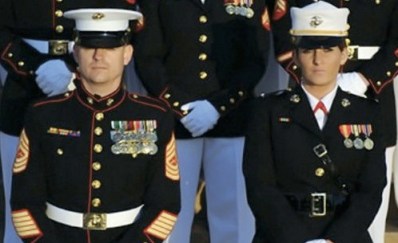
Rape, to me, is unforgivable. I am not alone in that mindset. But the reality is that there are an inordinate amount of men out there, in our nation’s Military no less, that are not only committing rape, but are part of an institution that’s been enabling them for years. Honestly, it’s a reality that’ll make you question your faith in humanity. And on top of that, it’s unbelievable to see the “preventative measures” that the Military has taken to address rape amongst the enlisted (eg: PSAs with catchy raps about the importance of a buddy system and just saying “No”), even more so to hear high-ranking female officers defend the said “steps” that have been taken, happily sweeping the facts under the rug despite what’s right in front of them. Guys, I could keep listing off examples, but hopefully you get the idea.
Now, I’m not a parent yet, but I’ve always to believed that if my future son or daughter were to enlist in the Military when they grow up, I would support their decision to do so. Not the path I chose to go down, but that doesn’t mean it’s not one worth pursuing. Then I saw this, and now I’m effing terrified. It’s one thing to imagine what it would be like to hear that your child was raped, it’s another thing entirely to see and hear testimonials from the husbands and fathers who’ve heard it first-hand. “Heartbreaking” doesn’t cut it. No one should have to make that call, and no one should have to take it.
I mean, the real quandary to me is how the hell did we even get here? To think that this shit is actually happening, to think that it’s happening so much and being covered up so well that someone felt compelled to make an investigative documentary about it, to think that I’m writing a review where I actually feel compelled to talk about how awful rape is – it’s just fucking ridiculous. This is basic human rights stuff, stuff I no one should have to be outspoken about because there’s no excuse for why we shouldn’t all be on the same page. It’s a hard enough thing to process on an individual level, but it’s just that much more mind-boggling when you take a step back and get back to square one: the difference between right and wrong.

What’s even worse is that this isn’t all that surprising given the state of the world we live in. People can run for political office and split hairs over what constitutes “legitimate rape,” or even go so far as to claim that “some girls rape easy.” For chrissakes, just yesterday it was announced that the Air Force will undergo investigation for the largest sex scandal in its history. Why don’t people know better, and who gave these people enough power for them to abuse? What a disgrace, and thank God those clowns didn’t get elected.
Folks, call me crazy, but rape seems like a pretty cut-and-dry thing. Raping someone or being raped is the kind of thing I can barely even comprehend, and I truly don’t know how the act ever became an issue for debate. Yet, in some circles, it’s accepted, and to some certifiably monstrous people out there, it’s habit. Viewing rape as anything other than an act of pure evil is, frankly, insane. And letting someone get away with rape is not only criminal, but arguably worse. Sorry if I’m sounding at all rambling or repetitive here, it’s just a lot of frustration at once, and it’s enough to make a man explode.
And it’s hard because, for all the bad people responsible this stuff, I know that there are good people out there trying to do something about it. Secretary of Defense Leon Panetta – someone who seemed genuinely disgusted and ashamed of the Military’s handling of sexual assaults back when he was on 60 Minutes earlier this year – has already taken significant steps in changing how sexual assaults are reported and investigated within individual units. Not to mention the men and women who were brave enough to participate in this film, and not to mention director Kirby Dick who was brave enough to make this film. But, as the film ultimately points out, this is not enough. Until men and women can enlist in the Military without fear of being sexually victimized by their peers or superiors, and until everyone pulls their head out of their asses and agree that rape is rape, it will never be enough.

It’s such a tragic movie, but the fact that it exists is the silver lining. Wouldn’t be surprised if this was a shoo-in come Oscar season, not that that really matters in the grand scheme of things.
Part of me felt inclined to give this movie a 9, if only for how devastating and ceaseless it is in uncovering one atrocity after another. It’s a film that made me angrier than it did impassioned, and it’s one of those docs that you probably need to be in the right mood for. However, it’s as required as viewing gets, and giving it anything less than a 10 just didn’t seem like an option. As men, as women, as people, we owe it to ourselves to know the truth and be educated about this stuff. We owe it to those who have survived being raped, continue to survive it, and also to those who haven’t. These people need help and attention in ways that a lot of us will never be able to comprehend, and for the most part, they haven’t been getting it and still aren’t either. And as much as this is a story about soldiers, it’s just as much as story about civilians. If rapists aren’t brought to justice while they’re enlisted, then what’s to stop them from changing their ways back home? Suddenly, it’s not such an easy thing to cover up or turn a blind eye to.
Look, it might be a tough go, but The Invisible War is without question one of the most important films you’ll see all year, and one that deserves the national attention its subjects are owed. While it’s hard to fathom that we ever got to this point, it’s mighty reassuring to find a film with the power to change it.
And if there are any veterans out there reading this, I would love to hear your thoughts.
Take This Waltz (2012)
 VERDICT:
7/10 Unsatisfied Ever Afters
Isn’t marriage grand?
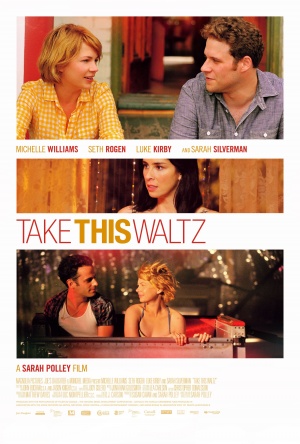
Take This Waltz is about a charming young woman who’s married to a kind, loving man. While vacationing by her lonesome, she finds her path continually crossing with that of another young man. They exchange glances from across the way, wind up sitting next to each other on the flight back, and even split a taxi on the way home. She arrives at her destination, finally informs him that she’s married, and much to her surprise, discovers that he lives right across the street. One of them small world scenarios. Despite her love and devotion for her husband, she can’t get her neighbor off her mind. As for the neighbor, the feeling’s more than mutual. Their lives keep intersecting, so much so that he starts actively seeking her out. So as the temptation grows and the spark of her marriage begins to fizzle, she weighs her options of whether to stay with her man or go with the new guy.
It’s the latest jam by Sarah Polley, and the impression I get of Sarah Polley is that, for those who know her, she’s something of a living legend. Not counting the occasional mainstream turn in ditties like Dawn of the Dead and Splice, Polley’s fashioned herself into an indie force of nature over the years. I, for one, a more unfamiliar than I care to admit, but in handful of times I’ve seen her, she’s never ceased to impress. Really gotta check out her debut writing/directing effort, Away from Her, one of these days. Always heard good things.

Anyhow, here she is with her sophomore effort, and though it takes a while for her to find the right words, it’s nevertheless interesting to hear what she has to say.
From the outset, however, there’s not much about that synopsis that sounds like anything new. Married women have been striking up affairs and staying with/leaving their men for ages on the silver screen. If you’re secretly hoping that Keyser Soze’ll show up the end, you’re barking up the wrong tree, but as trite as the formula may be, there’s good reason why we keep coming back. Believe it or not, people get urges. Regardless of whether you’re married or not, it’s a universal, relatable story and one that’s hard to turn away from once the lure’s been cast. However, no one likes hearing the same story under a different name.
With that being said, the thing that separates Take This Waltz from other movies of its kind – at least for the first two Acts – is the marriage between Margot and Lou. For the most part, it’s an unusually true-to-life vision of what married life is actually like. Lots of inside jokes, lots of goofing around, and the stereotypical sex life that isn’t what it once was. Nevertheless, it’s a happy marriage, and it’s clear that Margot and Lou both love each other. But by the same token, there’s something very routine about their marriage, something that Margot uses to justify her flirtations and longing for something else.

Being a married man myself, watching the day-in and day-out of Margot and Lou’s relationship was far more interesting than any of her shenanigans with the hipster next door. It’s a marriage that’s clearly written and directed by someone who’s been there before, and it’s unlike any marriage I’ve really seen in a movie before, which is odd considering how realistic it is. Then again, word on the street is that no two marriages are alike. Still, it could have been the genuine article had Seth Rogen and Michelle Williams been a more convincing on-screen couple. Not to belittle their individual performances, ’cause I love me some Michelle Williams, and Rogen keeps proving himself as a welcome addition to dramas these days, but together, I just had a hard time buying it. Whether it’s their trivial arguments that felt more sudden than authentic, or their goofy natures that at times will make you gag, they almost seemed too comfortable around each other. It’s a strange kind of forced chemistry, and as realistic as the habits of their marriage may be, the downside is that it can be realistic to a fault. Way too PDA for me, even when they’re in private. You know the couple I’m talking about.
But like I said, the first two Acts are pretty much what you’d expect from this kind of picture. It’s all one big emotional lead-up to Margot making her big decision, and it works for what it is. Who’s she gonna choose? What’s she gonna do? You know the drill, it’s why we stay tuned. Not to say that the first two Acts aren’t without their merits, but there wasn’t much more than the desire to know what happens that was keeping me invested either. Let’s just say that had it not been for the final Act, this movie would have been pretty forgettable.

Given the element of surprise, there’s not much I can say about what actually happens in Act three. It’s actually ridiculous how little I can say, but I fear I’ve already said too much. They’re onto me. Kids, you’re just gonna have to see for yourselves But the wonderful thing about Act three is that it’s a major turning point for the movie as a whole. It’s the point where Sarah Polley starts saying something with her story instead of just furthering the whole “will she/won’t she?” thing that we’ve all been waiting for. It changes the movie entirely and brings this otherwise straightforward story to new, difficult to navigate depths that I never figured it would dare venture into. For a movie that feels so safe and predictable for so long, I was surprised and impressed with how Polley turned things around.
Since seeing it two weeks ago, I’ve had a hard time getting Take This Waltz of my mind. Didn’t dig its sense of humor, was only moderately invested in a majority of its story, and it’s certainly not my favorite movie of its kind. But it leaves you with a lot to work out and takes some worthwhile, unexpected steps towards ultimately telling a story that we haven’t heard before. The characters here, Margot especially, leave a lot for the viewer to sort out and come to terms with, and for any movie, regardless of how familiar it is, is a worthwhile accomplishment. I haven’t had the chance to talk about it with anyone else yet, but I’m guessing people will be pretty divided over how they feel about the path Margot goes down. At the very least, it’ll get you talking. Particularly interested to hear the reactions from all you bachelors and bachelorettes out there. Us married folk are jaded.
And one more thing: do girls actually have ho-hum, “don’t mind me” conversations with each other while soaping up in a public shower? I hesitate to believe that actually happens. The wife calls bullshit, and I’m with her on this one.
Skyfall (2012)
 VERDICT:
8/10 Rogue Agents
“Old dog, new tricks.” Damn right.
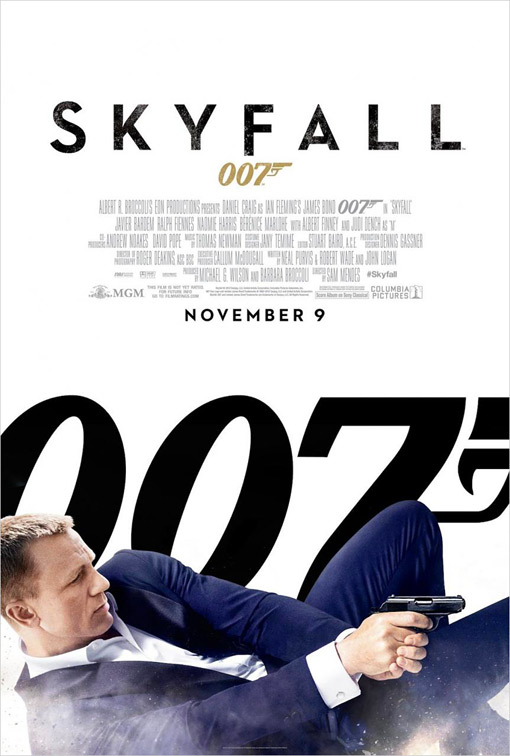
Usually with these Bond reviews, I kick things off by saying how “it picks up where [insert previous Bond film] left off, with 007 bedding new broads, killing new cronies, and saving the world from some seriously bad dudes.” This time, however, we’re singing a different tune. Forget about whatever the hell it was James was doing in Quantum of Solace four years ago. You know what, just forget that movie ever happened. Skyfall picks up with a nice clean slate. James is in Turkey chasing down a stolen hard drive, he winds up in a fist fight on top of a moving train, and thanks to a bad call by M, ends up getting shot by a fellow operative. With a chip on his shoulder and a mortal wound to recuperate, he hits the bottle, grows some stubble, and lets the brass at MI6 sweat it out, still under the impression that he’s six feet under. But then, in total buzzkill fashion, a terrorist cell up and hacks into the MI6 mainframe, starts publicly revealing the names of undercover agents across the globe, and then blows up MI6’s headquarters for good measure. Realizing that his country needs him more than he needs Captain Morgan, James suits up and heads back home to uncover the responsible party before more agents get compromised and M gets a lead salad. TIME TO KICK SOME ASS!
As far as reboots go, these last three Bond films have run the gamut in terms of quality and execution. Casino Royale reinvented the wheel by stripping away the gadgets, humanizing James, and, god forbid we get bored, injecting 100 cc’s of cheetah adrenaline into our foreheads. Then Quantum of Solace came along to give us the most convoluted, droll, dialogue-heavy script in the series, and complemented it by making James the mopiest mother-effer on her majesty’s secret service. It was a hard act to follow, and, boy, did it show. Blame it on the writers’ strike. So, with these two royally contrasting entries to go off of, let’s just say I was pretty clueless as to how Skyfall would be approaching things.
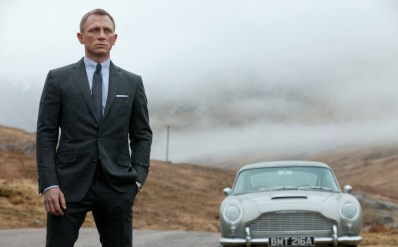
Lo and behold, Skyfall is a throwback.
Now, there was very good reason for why Casino Royale nixed all the gadgets and orgies that had been synonymous with Bond over the years. Kids, Uncle James had jumped the shark. Dude probably had 12 different strains of mutant hepatitis from years of close encounters with Pussy, Christmas, and every other stripper-named vixen he encountered. And while my first-hand knowledge of the British secret service is admittedly lacking, no amount of forethought could ever bring one to prepare for a situation where, if the need arose, they could para-surf their way out of a glacial tsunami…on the jerry-rigged roof of a car. Once upon a time, this had all been good fun, but somewhere down the line, it all started getting ridiculous.
But after pulling pages from John McClane’s handbook of DIY ass-kickery, things have finally come full circle. Q Branch has been reinstated, gadgets and all, and Bond has so-much-effing-game that he can break into a woman’s room, walk in on her mid-shower, and instead of being bludgeoned with her soap-on-a-rope, she scans his nudity before jumping his bones. That, is some game. To be honest, I didn’t think we’d ever get a Bond movie like this again, and I wasn’t sure I wanted one either. But the transition back to basics is a smooth one. The movie actually starts out pretty similar to the way Casino Royale did, with Bond getting into a motorcycle chase over the rooftops of a Turkish city, then trading his wheels for an excavator to re-couple the moving train he’s on. Needless to say, it’s a pretty wild scene that feels like Casino Royale as much as it looks like it, but it’s the way the scene ends that really brings us back to the golden era of Bond. Not to mention that the gadgets are both minimal and practical, and, frankly, Bond can shack up with as many women as he wants so long as he’s not a sad bastard anymore. Thank God that got taken care of.

Man, it is just so good to have Daniel Craig back. This is the James Bond we all went ape over six years ago. His sense of humor’s back, the one-liners are back, and, ladies rejoice, his magic pot-bellied six-pack is back, too. Who cares if he’s throwing back the occasional Heineken between martinis? This man earns his beers. The great thing about Craig is that he brings such a great balance of raw power and effortless swagger to James, and he really makes the character given all the uncharacteristically heavy stuff he’s been put through as of late. If his mourning and moping over Vesper Lynd was any indication, Bond is so much more complicated now than he’s ever been before, and Craig just knows how to handle him. Not saying I’m on the bandwagon, but there is most certainly a case to be made for him being the best Bond of them all. Case in point.
For that matter, everyone in this movie is awesome. Dame Judi Dench is one tough cookie and gets a whole lot of much-deserved screen time as M; Ben Whishaw is our latest Quartermaster (points to anyone who knew that’s what “Q” stood for) and it’s probably the best role I’ve ever seen him in to boot; Naomie Harris has spunk to spare as our latest Bond girl, Eve; and since I’ve got all kinds of time for Ralph Fiennes, one can only imagine my surprise and excitement when he showed up with such a prominent role as M’s superior officer (or at least I think that’s who he was).
And then there’s Javier Bardem. You probably know how this next paragraph’s gonna go.
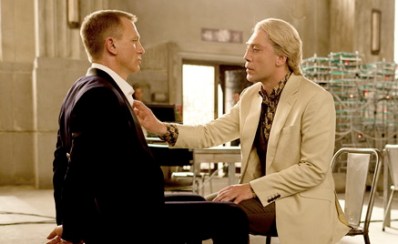
If Javier Bardem could play every villain in every movie from here on out, that’d be just super. Here he is as the nefarious Silva, and while there ain’t that much I can divulge about him in detail, Bardem, as usual, does not disappoint. Of all the eccentric folks that Bond’s squared off against over the years, Silva’s quite the original. He’s like the ambiguously gay, bleach-blonde love child of Hans Landa and The Joker. I know, the fear is palpable! Yeah, he doesn’t seem all that bad from the outset, he actually seems quite pleasant for that matter, but, folks, aren’t those always the worst ones? Plus, he’s got the brains to match the duds. While everyone is working overtime to ramp up their defenses and lure him into their traps, he’s invariably ten steps ahead, amused by the rats as they fall into their own snares. From his lighthearted personality to his ingenious nature, he’s a Bond villain of the highest order, and as much as I loved what Mads Mikkelsen did with Le Chiffre, Silva’s got himself some layers. Been a while since we’ve gotten one of them. I mean, what’s not to love about a villain who enters into battle blasting John Lee Hooker songs from his blackhawk? Nice touch, Silva. Very nice touch.
But alas, I find myself torn over Silva, or rather the said ingenious plan he puts into motion. Without giving anything away, Silva’s reign against MI6 goes from being complex to a fault, to being straightforward to a fault. For all the work and brainpower he puts into his plan, his ultimate goal, while understandable, seems a bit too “small time” as far as motives of a terrorist mastermind go. And it’s not that the scope or execution of his plan doesn’t hold water, it’s just that, for a guy who can essentially control the world from the comfort of his MacBook, he takes a very roundabout way of achieving something that he probably could have pulled off within the first ten minutes of the movie. Long story short, this script was a collaboration of three writers, and for all the things that work about it, there are definitely times when it feels like there were too many hands in the cookie jar. Examples include: occasional pacing lulls, a climax that struck me as oddly anticlimactic, and a bunch of instances where someone could have easily offed their target but ended up losing their window for some weird reason or other. It’s the risk you run with more than two writers, and it’s the one thing keeping this movie from nabbing a 9. Some fat could have been trimmed, and when you’re clocking in at nearly two-and-a-half hours, the plot would have flowed better for it.

Still, keep in mind that these complaints are pretty minor in comparison to the things I liked about this movie, writing or otherwise. The attack on MI6 brought Mission: Impossible – Ghost Protocol to mind, the last five minutes gave me some major flashbacks to The Dark Knight Rises, and at the end of the day, it was great seeing Bond go back to his roots. In a lot of ways, this is an unusually risky Bond film in terms of the ground it covers, the stakes it raises, and the guy they got to helm it. With the arguable exception of Road to Perdition, Sam Mendes doesn’t make movies like this. If James Bond were a suburbanite who secretly hated being a suburbanite, Mendes would have been on speed dial for this sucker. But I love that he stepped out of his comfort zone and gave this one a whirl. He really put together a fine action movie, one that any action director would be proud of, and it also happens to be the best-looking Bond movie ever made. Truly gorgeous set pieces from one locale to the next, and that wouldn’t have been the case had he not brought himself to the table. Point is: way to go, Sam.
Alright, time to wrap this beast up.
The best news of the day is that Skyfall cements Quantum of Solace as being a Mulligan of the highest order. The good news of the day is that it’s easily one of the better entries in the series. As for how it fares against Casino Royale, well, I suppose that news is debatable. Personally, I’m still partial to Casino Royale and everything it did to make this franchise phenomenal again in one fell swoop. Then again, they’re two different movies with two very different approaches. Skyfall is a completely unexpected and more than welcome return to form for a series that, for better or worse, has strayed from its roots as of late. While it could have benefited from some focus at times, it is nevertheless a fresh start and a bold step towards fleshing out a character we’ve barely known for five decades. And the icing on the cake: it’s a total-freakin’-blast.
Theme song and opening credits ain’t too shabby either.
And the best horror franchise is…
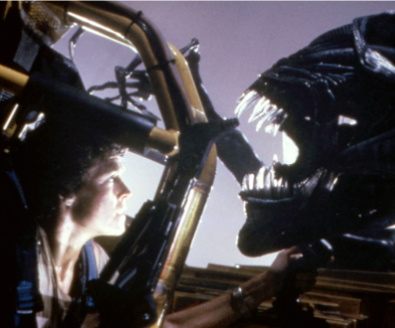 ALIEN!
Been a while since I really dug an entry in the Alien franchise, but hard to argue the vote when you sure as hell can’t argue those first two movies. Ellen Ripley, man. What a badass.
Swell voting, folks. Hope you got mad candy from the neighbors this year.
RESULTS:
– Alien: 15 votes
– The Evil Dead: 8 votes (would have been my vote)
– Paranormal Activity: 6 votes (hot damn…)
– A Nightmare on Elm Street: 5 votes (points for best villain)
– Scream: 5 votes (am I the only one who liked Scream 4?)
– The Exorcist: 3 votes
– Halloween: 3 votes (thanks for nothing, Rob Zombie)
– Friday the 13th: 2 votes
– Saw: 2 votes
– Night of the Living Dead: 2 votes
– The Texas Chainsaw Massacre: 2 votes (never seen it, I feel shame)
– Child’s Play: 1 vote
– Hellraiser: 1 vote (always been a bit partial to those movies)
– Poltergeist: 1 vote
– “Ironman“: 1 write-in vote (assuming we’re talking about the Tetsuo movies rather than Tony Stark)
– “Bad Taste/Dead Alive (Peter Jackson…does this count?)”: 1 write-in vote (why the hell not!)
– “28 Days/Weeks Later“: 1 write-in vote
– “Child’s Play, only because you used to be so afraid of it :)”: 1 write-in vote (they’re onto me…)
Follow-up question: What’s the general consensus on this upcoming Evil Dead remake? Skeptical? Psyched? Serenity now? I gotsta know, son!






 Cut The Crap Movie Reviews