The Loved Ones (2012)
 VERDICT:
8/10 Families That Prey
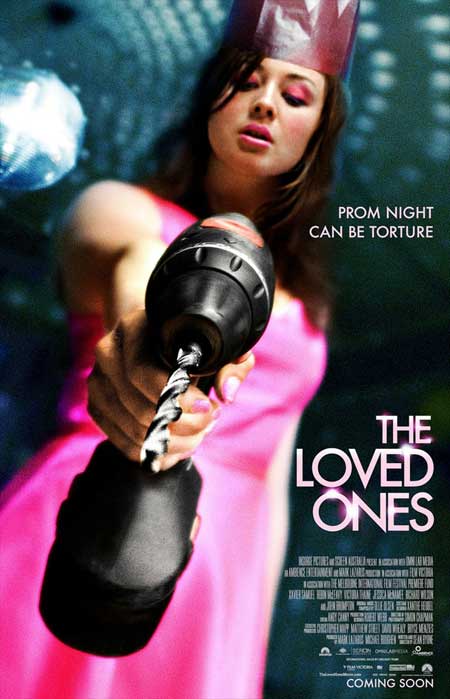
Chalk one up for all of us who skipped prom.
The Loved Ones is about a handsome young buck from Australia named Brent. He goes to school and has a nice, steady girlfriend, but behind closed doors, Brent’s in bad shape. He blames himself for his father’s death and cuts himself to cope with the guilt. He’s come a long way, but life’s been better. Quite unfortunately, it’s about to get a lot worse. See, there’s this girl in his class; an odd, meek girl named Lola. On one such fateful day, Lola works up the courage to ask Brent to prom. Being that he’s spoken for and all, he lets Lola down in the nicest, most genuine way one could to a relative stranger. Then he heads home, takes out some aggression on himself, and while out in the woods blasting doom metal through his iPod, up and gets kidnapped by Lola’s dear dad. He wakes up soon after, dressed to the nines and strapped down to a chair in the dining room of Lola’s house. Turns out, Lola doesn’t take rejection all that well, and since her dad’ll do just about anything to make his girl happy, they decide to take matters into their own hands. So while his mother and girlfriend search high and low for his whereabouts, Brent buckles down for the worst. prom. ever.
What a great idea for a horror movie. How has this not been done before? Everyone hates rejection, and there is no bitter sting quite like putting your heart on the line and being turned down flat…or so I hear. Didn’t exactly date much in high school, and like I said, prom somehow went on without me. Not like I asked anyone in the first place, and I sure as hell wasn’t going stag, but such is life when you’re a geeky teen at an all-boys prep school. Alright, enough of this “woe is me” shit, I’m getting off track. The brilliance of The Loved Ones, at least from the outset, is that it’s essentially a blend of Sixteen Candles and Fatal Attraction. Two very different movies, but when you think about it, ones that would totally go together if Jake Ryan hadn’t been into redheads. Man, that Molly Ringwald was having a rough day to begin with. Who knows what kind of wrath she could have been unleashed on that jock if he hadn’t rolled up to her house at the end.
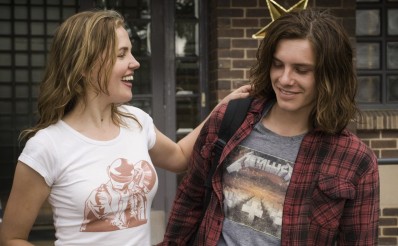
Anyhow, I had all hands on deck going into this one. Had heard good things, it definitely sounded like a winner, and I couldn’t deny being oddly intrigued at how that power drill was gonna enter into the equation. However, this also led to my one concern: the very real possibility of this spiraling into torture porn at some point. Call me crazy, call me a wuss, but if one thing’s for certain, torture porn is right up there with found footage in terms of things that horror could really do without these days. Intrigued as I was, I couldn’t ignore the fact that when crazy people get power drills, bad stuff starts a-happening. And as I came to find out, when Lola gets a power drill, she puts the crazy people to shame. She goes Jeffrey Dahmer on the bitch.
With that being said, The Loved Ones is one tough cookie. Bloody, gruesome, depraved, and violent, plus a whole lot of torturing to boot. Still, it’s not torture porn. Two reasons for why that is:
1) When I think of torture porn (not something I think of often), I think of the movies that leave nothing to the imagination. When someone gets maimed, the camera’s right there, forcing us all to watch, look away, or pass out. They’re an endurance test for your gag reflex. While there’s very little about The Loved Ones that isn’t an endurance test (albeit of a different breed), it’s less an exercise in traumatizing its audience as it is in testing its characters. A lot of the stuff that happens to Brent, we don’t see it head-on. We see the build-up, we see the aftermath, and on the occasions when we do see things head-on, we only get to see them in spurts. It’s a lot like Seven in that regard, and believe me, as rough as it is, it could have been way, way worse if writer/director Sean Byrne had approached it differently.
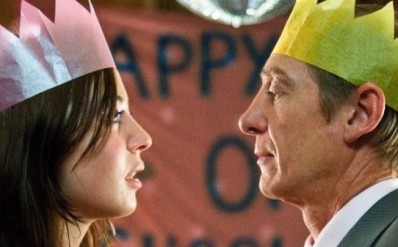
2) Torture porn is about one thing and one thing only: making people suffer for the sake of suffering. Why? Because it’s entertaining. Apparently it’s entertaining. Still, make no mistake, because suffering’s very much on the menu here. For chrissakes, it’s the house special. But there’s more to it than that because the characters aren’t pincushions. This really is a teen drama at its core, one that’s firmly rooted in everything that sucks about being a teenager and uses that base a catalyst for what happens after. It’s clear that Byrne cares about these characters and didn’t write them as lambs to the slaughter or the slaughterers of lambs. In turn, we care about them just as much and want to so see them survive/die that much more than we would have otherwise.
It’s really great how much depth and genuineness Byrne managed to imbue into this movie, but the only thing that’s still nagging me is actually Lola. My problem with Lola is actually the same problem I have with Fatal Attraction: the way Glenn Close gets painted as this uber-needy psycho-bitch from Hell who’s out to destroy Michael Douglas’ life, while Michael Douglas gets painted as the victim even though he led her on, had an affair with her, and knocked her up like a total idiot. Not trying to defend Glenn Close, because rabbit boilers are a special kind of crazy, I just hate the way that movie created this black-and-white, “she’s crazy, he’s innocent” dynamic when there was clearly so much grey to work with. Michael Douglas was a lowlife in that movie, man. And not to say that Brent is at all like Michael Douglas’ character, but I do wish there was more fueling Lola’s behavior than the notion that, since her family’s nuts, she’s nuts, too. The best thing about this premise is that the heartache caused by Brent’s rejection instantly creates the potential for some kind of sympathy or empathy towards Lola. I really wish Sean Byrne would have rolled with that more than he did, ’cause that could have worked wonders in terms of messing with the audience’s emotions, but alas, we have to settle for “crazy is as crazy does.”
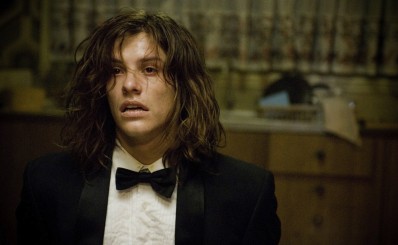
Then again, not a tough thing to settle for given how good Robin McLeavy is at being Lola. Xavier Samuel’s totally committed as Brent, and John Brumpton is equally convincing in his lunacy as Lola’s old man, but the only one anyone’s gonna be talking about at the end of this is McLeavy. Girl’s got the gift, much like the one Kathy Bates had in Misery. Great job, Robin, and I wish you all the best in procuring a real-life date after this.
For a number of reasons, The Loved Ones shouldn’t work as well as it does. There’s this whole side-plot that follows Brent’s best friend and his night at the non-sociopathic prom with the town sheriff’s daughter, and as much as it tries to connect things back to Brent, it only really serves as a break from all the madness. Although, it is a welcome break at times. On top of that, there are a bunch of instances where it steps full-force into a dungheap of horror cliches that had me shaking my damn head at times. Not double-checking to make sure someone’s dead, people suddenly showing up/remembering key information at just right time – that kind of stuff. But the weird thing is that the moments pass along and really don’t detract from the experience as a whole. They don’t occur all that often, and when they do, it feels like Byrne’s doing them on purpose and not because he’s written himself into a corner. It adds to the suspense rather than adds to the frustration, and I’m still not really sure how he pulled it off.
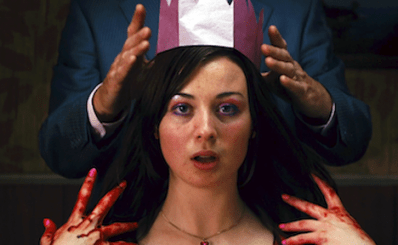
But despite it’s slight shortcomings, The Loved Ones is a piece of work. Aside from being a totally effective horror movie, the thing that brings it to a whole new level is that it’s a really compelling story of survival. I loved how it revolved around Brent, how all the psychological anguish and physical pain he’d endured as a result of his father’s death is what prepared him for this shithouse of a night. Not only is he a refreshingly honest portrait of what a lot of teens have to live with, but it’s so easy to root for him as he turns his weaknesses into strengths. Whether its the premise, the characters, or the glimmer of hope that maybe, just maybe, Brent might live to see graduation, this is one hell of an easy movie to get invested in
Good luck forgetting Lola, good luck getting this goddamn song out of your head afterwards, and don’t feel bad for laughing along the way. A nice, morbid sense of humor never hurt nobody.
Oh, Lola. You so crazy.
The Do-Deca-Pentathlon (2012)
 VERDICT:
7/10 Brotherly Loves
Certainly inspired, but could have been epic.
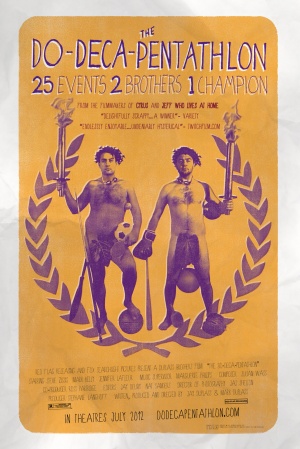
The Do-Deca-Pentathlon is about two estranged brothers. One grew up and had himself a wife and kid, the other grew up to become a professional poker player with aspirations of continued bachelorhood. Now in their 30s and driven apart by their competitive natures, they reunite to celebrate the family man’s birthday. It’s actually more like the bachelor shows up unannounced and uninvited to beat his brother at the 5K he signed up for, but that’s just how they are. So, with things still tender between them, the bachelor challenges his brother to a rematch of The Do-Deca-Pentathlon: a 25-event, mano-a-mano competition they once competed in as kids. Knowing his wife and physician would highly disapprove, the family man is initially hesitant. But thanks to a bruised ego coupled with some victories during a few late-night competitions, the family man throws down, keeps it from his wife, and strives to regain his former glory without risking his marriage in the process.
That’s right, boys and girls, we’ve got another Duplass brothers movie on our hands, and if you’re at all familiar, you know what to expect. Familiar faces, familiar style, familiar themes, and familiar vibes. I’d like to think that this is good news all around, but for some, I’ve found that this return to form is a return unwelcome. Maybe it’s all the extreme-closeups and shaky-cam cinematography, maybe it’s how off-the-cuff everything always feels. Whatever the reason, I do get it, and if it’s not your thing, then this ain’t either. It’s more of the same for better or worse, but as for me, I’m all about it. The Dupli have done me right this year, and I don’t foresee that changing anytime soon.

Now, I have myself a theory, one that I tend to swear by and, amazingly enough, can back up with solid evidence. You ready? Well get ready! Folks, when it comes to TV, the best episodes of the best shows are the ones that involve a competition. Granted, not every show has one of these episodes, I don’t watch nearly enough TV to be an authority on the matter, and blanket statements like this tend to bite me in the ass. However, I present the evidence: “The Contest” episode of Seinfeld, the episode of Friends where they play roommate trivia for each other’s apartments, and the episode of Cheers where Cliff gets on Jeopardy! I’m sure there are others, but that Seinfeld episode alone should be enough to make some believers out of this terribly bold statement.
With that being said, this here is a great idea for a movie. In theory, it’s like a grown-up version of Kenny vs. Spenny, and that, dear readers, is a golden premise. Depth and story aside, there is so much potential right off the bat for hilarious scenario after hilarious scenario that male audiences in particular will be unable to resist. As for the ladies, I have no idea what the draw will be or if there’s even any to begin with. But still, we men love us some competition. Anyhow, as much as I’d love to segue this into a riff about how hilarious it ends up being, this, unfortunately, is what leads us to the bad news.

For all its potential, there ain’t all that much competing going on. I mean, we see them compete from one event to the next, but it comes off more like a montage than it does an actual do-deca-pentathlon in all its middle-aged grandeur. As a result, it’s hard to root for someone in the moment since it’s hard to figure out who’s winning or losing, and there are only a couple instance where we get to see their feats of strength or underdog performances acted out from the start of an event to its finish. I don’t know, perhaps I’m just being nitpicky here, but I was really hoping for more. Not to say that it isn’t fun as is, it just could have been more. And when you give your movie a bold-ass title like “The Do-Deca-Pentathlon,” I don’t think that’s an unreasonable hope to have. Just add another ten minutes to the movie, draw out the montages into full-blown scenes, problem solved. Whoomp, there it is.
Although the good news is that all this lack of competition is made up for by the one thing the Dupli do best: character development. Lo and behold, the heart of this story doesn’t belong to the do-deca at all, but rather to the family man and his inner struggles. Even though his son thinks he’s a loser, and even though his wife is doing her best to stifle the beast inside of him, he insists that he’s happy. He’s playing the part, and he almost convinces us of it, too. But then starts the do-deca, and just like that, the beast is unleashed. Overnight, it becomes his number one priority in life. Birthdays, relationships, the responsibilities of adulthood and parenthood – all that shit can wait. It’s not unexpected given that the Dupli’s love them some self-realization, but it is unexpected if you’re going in expecting the do-deca to take front and center.
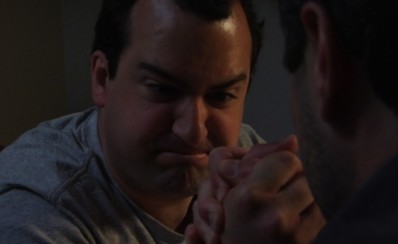
And I dig that about this movie. This is a very relatable, human story that’s less about a pissing contest as it is about the rocky road towards finding oneself. Easily one of my all-time favorite movie themes, so that never hurts any. And it’s very simply executed to boot. As usual, this is a low budget, no muss, no fuss production with a solid cast that knows the drill. No one really stands out above anyone else, but they all work well together in a lot of the same ways. At the end of the day, it’s a movie that knows its strengths, knows its limitations, and uses them to its advantage. It’s one of those movies that makes you feel good.
If this is your first introduction to a Duplass brothers joint, it’s not a bad place to start. Sure, The Do-Deca-Pentathlon could have done a way better job of capitalizing on the awesomeness of having two grown men going modern-day Greco-Roman on each other’s asses, but that gripe aside, there’s still a lot to enjoy. Like I said, it’s a lot like the other movies these guys have made, and it succeeds in a lot of the same ways. It’s really likable from its characters to its context, it’s commonplace yet surprisingly larger-than-life, and there’s truly something magnetic about how natural it all feels. But by the same token, I already like the Duplass brothers, and something tells me that probably helped. Doubt it’ll convert the non-believers, but worth a shot if you’re new to the choir.
Still, it’s no Kenny vs. Spenny. Then again, what is?
Cloud Atlas (2012)
 VERDICT:
8/10 Life Cycles
A mighty tall order, mostly filled.
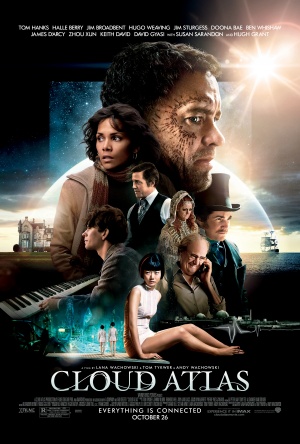
Cloud Atlas is the story of six individuals. One is an American lawyer from the mid-1800s whose health becomes jeopardized during a Pacific expedition. One is a struggling composer trying to make a name and a life for himself in England during the 1930s. One is an investigative journalist in 1970s who puts her life on the line to uncover the truth behind a potential nuclear catastrophe. One is an aging publisher who finds his good fortune turn sour and his life turn upside-down in modern-day England. One is a “fabricant” who gains sentiency beyond her programming in the Orwellian future of Neo-Seoul. And one is a “tribesman” struggling with his own demons in the post-apocalypse of Hawaii. Though their stories seem separate, their souls are intertwined, and from one era to the next, they to continually cross paths and realize themselves in both good ways and bad.
If there’s anything to be said of Cloud Atlas, it’s that it aims awfully high. I mean, why tell one story when you can jump back-and-forth among six? In your face, every other movie ever made! Yup, definitely not the storytelling we’re used to in any medium, but by the same token, that’s what’s so refreshing about movies like these: even if they end up crashing and burning in the long run, at least they went big and gave us something new. Points for trying, right? Not to say that aiming high and starting fresh has ever been a sure thing, but every once and again, the strengths outweigh the shortcomings and we get something that lives up to its ambitions of grandeur. Enter Cloud Atlas, the ambitious son of a bitch it is.
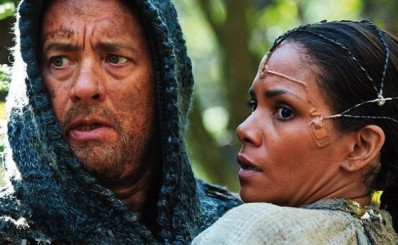
So, of all the books I read this year in preparation for their big-screen adaptations, not a one matched the many payoffs that came with giving Cloud Atlas a go. Before I get to the adaptation, allow me to set the mood. Cloud Atlas is unlike anything I’ve ever read. On top of that, it’s one of the best books I’ve read in years. As you can guess from the synopsis, it’s essentially six separate novels written into one with each story written in a different style and voice, and each stemming from a different genre. Yet, they’re all connected, and figuring how they’re all connected is one of the most extraordinary things about it. It’s one of those novels that book clubs probably go ape over (like I have any idea what goes on in a book club) as there is much to discuss and nothing all that straightforward about it. Cloud Atlas is a true feat of structure and storytelling, I couldn’t put it down, and even if you’ve already seen the movie, I’m gonna be That Guy and suggest that you still read the book anyway. And if you haven’t seen the movie yet, trust me, the book helps.
Although much as I adored the book, not once was there a time where I envisioned it as a movie. It worked as book because books are a more flexible medium to work with. For chrissakes, you can write a chapter in Powerpoint slides if you want to. As anyone who’s ever tried writing a script can attest, movies don’t have this luxury. There were stories that stopped short mid-sentence by page 56, only to start up and conclude 400 pages later where that mid-sentence left off. Not to mention that whole six characters across six stories thing. I mean, one writer/director has a hard enough time telling one story about one character without screwing the pooch and bankrupting a studio. I’m all for taking risks, but I had no effing idea how three writers/directors, even with $100 million at their disposal, could make something functional out of this. Man, if Naked Lunch taught us anything, it’s that some books just don’t need to be movies.
Then again, here we are, and needless to say, there is a lot to cover.
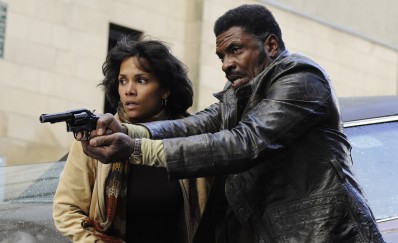
Unsurprisingly, not everything made it to the final cut, but considering what Tom Tykwer and the Wachowski siblings were working with, it’s hard to be critical of what did make the cut and how inspired they were in bringing it to life. The individual story lines follow their inspirations quite closely, and the liberties that are taken are done with a clear respect for author David Mitchell’s vision. The best example of which is probably how they decided to cast this movie. It takes a little getting used to, but I really, really dug their recycling of actors to play different characters across different story arcs. See, Cloud Atlas is a story about history repeating itself, about the will of good overcoming the timelessness of evil, and about facing those evils head-on from one reincarnation to the next. With that being said, it makes absolute perfect sense to go the route that they did. Sure, you could just cast 30 more actors to fill all these roles and I don’t think it would detract from anything in the long run. But the fact that they went for the unconventional speaks volumes about the respect these film makers have for the unconventional brilliance of their source material. As a result, everything feels far more connected than it otherwise would have, and lest we forget, that is what this story’s all about.
And as challenging as it must have been to put this movie together from top to bottom, there is so much artistic potential that they take full advantage of. This is a gorgeous movie with makeup, costumes, and set pieces that will flat-out effing astound. Doesn’t always work when they start making people look like other races or genders, but there are a bunch of times where you’ll have to squint like a mofo just to recognize the actor you’re looking at. Hugh Grant especially. Something tells me that dude practically lived in the makeup trailer. Plus, the whirlwind structure works far more effectively than I could have imagined as it continually, beautifully transitions from one story to the next without skipping a beat or dropping the pace. It’s a lot to take in and it’s a lot to keep track of, but the way it’s put together, it’s somehow easy to play along. Given that this was far and away the biggest hurdle these guys had in front of them, it’s pretty amazing the way everything comes together.
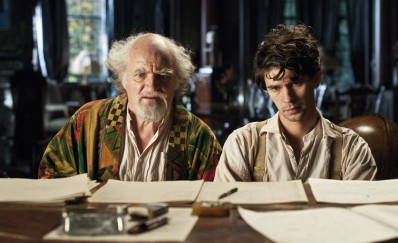
And I totally forgot how good the Wachowskis are at filming action scenes. How in the hell did I forget that?
Alright, I should shift gears before I ramble any further about the film making here. In short, it’s been a long time since I’ve seen anything by any of these film makers, but damn, do they still got it and do they work well together. What can I say, it’s always great to find film makers who are fans of the source material. After all, it’s not like Hollywood was on phone ’cause Cloud Atlas was flying off the shelves at Barnes & Noble. These film makers wanted to do this project, and they made it their own while honoring what drew them to it in the first place. Instead of seeing difficulties, they saw the possibilities, and for all the liberties they take, the payoff makes it worth while.
And as for the cast, everyone’s pretty solid. No one really stands out more than anyone else, but that’s alright. They’re all good, and since this isn’t really their show to begin with, “good” goes a long way. If I had to pick one of ’em, I guess Jim Broadbent was the most memorable of the bunch. Doesn’t hurt that his was the only story that was better on film than it was on paper. Really wish I could say the same about Doona Bae’s story line, but that one kinda deserves a movie entirely unto itself.
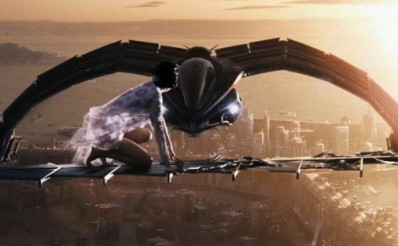
As much as I’d like to recommend Cloud Atlas for everything that makes it the special story it is, it’s a hard one to recommend at all. Having read the novel beforehand gave me a much clearer picture of everything that was playing out before me, but it also made it hard to assess what it would have been like going in blind. The heart and soul of the novel are very much here in the film, and that makes all the difference. As for the finer details that highlight the importance of each character, event, and thing being said, those might be harder to pick up on and could in turn muddle the film as a whole. But that’s the thing about Cloud Atlas: it’s an incredibly subjective experience, one that’s difficult to break down objectively because everyone’s going to react to it differently. I can give it my stamp of approval and tell you to keep an open mind, but as much as there is for some to admire, I can imagine there’s just as much for others to be baffled by.
Whatever side of the fence you wind up on – and chances are you won’t end up in the middle – Cloud Atlas is an experience. For me, it was a very special experience, one that may not have resonated as much as its source material, but one that resonated all the same. As a true believer in karma and the afterlife, the themes and notions that tie everything together here are ones that rarely find their way into movies, and they’re ones that I try to live by. Might not hit the nail on the head with each swing it takes at wisdom, but to call this movie unique is to call a rainbow monotone. More movies should strive for this kind of ambition. Still, some may say its grasp was bigger than its reach, and in some respects, they’re probably right. Make no mistake, this is one lofty, epic, metaphysical bastard of a movie, but hey, that’s exactly what I loved about it. For that matter, a lot of things I liked about this movie were things I liked about the book, and at the end of the day, that’s an awfully satisfying feeling to leave with. Can’t remember the last time three hours went by this fast.
And the best athlete-turned-actor is…
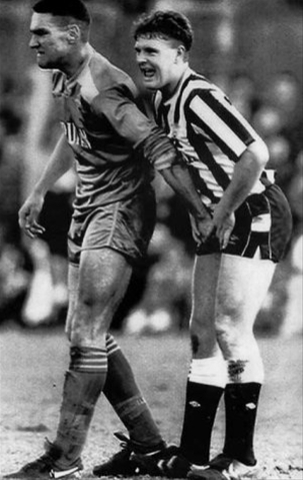 VINNIE JONES!
Holy crap was that a tight race! Some awfully surprising results down there, but going solely off his turns in Lock, Stock and Snatch (and despite being nearly identical movies with nearly identical characters), it’s hard to argue against Jones lest you want your wiener crushed. Can’t wait to see who eventually wins the worst athlete-turned-actor poll, but until then, swell voting, folks!
RESULTS:
– Vinnie Jones: 9 votes
– Andre the Giant: 8 votes (lotta Princess Bride fans in the house)
– Chuck Norris: 7 votes
– Ahnuld: 4 votes (gotta say, surprisingly low turnout)
– Carl Weathers: 3 votes
– O.J. Simpson: 2 votes
– Bob Uecker: 1 vote
– Jim Brown: 1 vote
– Bubba Smith: 1 vote
– Gina Carano: 1 vote (right on)
– Shaq: 1 vote (thank you, whoever you are)
– Dwayne “The Rock” Johnson: 1 vote (not sure how I forgot to include him on the list, but the write-in vote did make sure to add “so hot” to the entry)
– Merlin Olson: 1 vote
– Kareem Abdul-Jabbar: 0 votes (how the hell did that happen?)
And apologies for the lack of reviews and comment replies this past week. The flu sucks.
John Carter (2012)
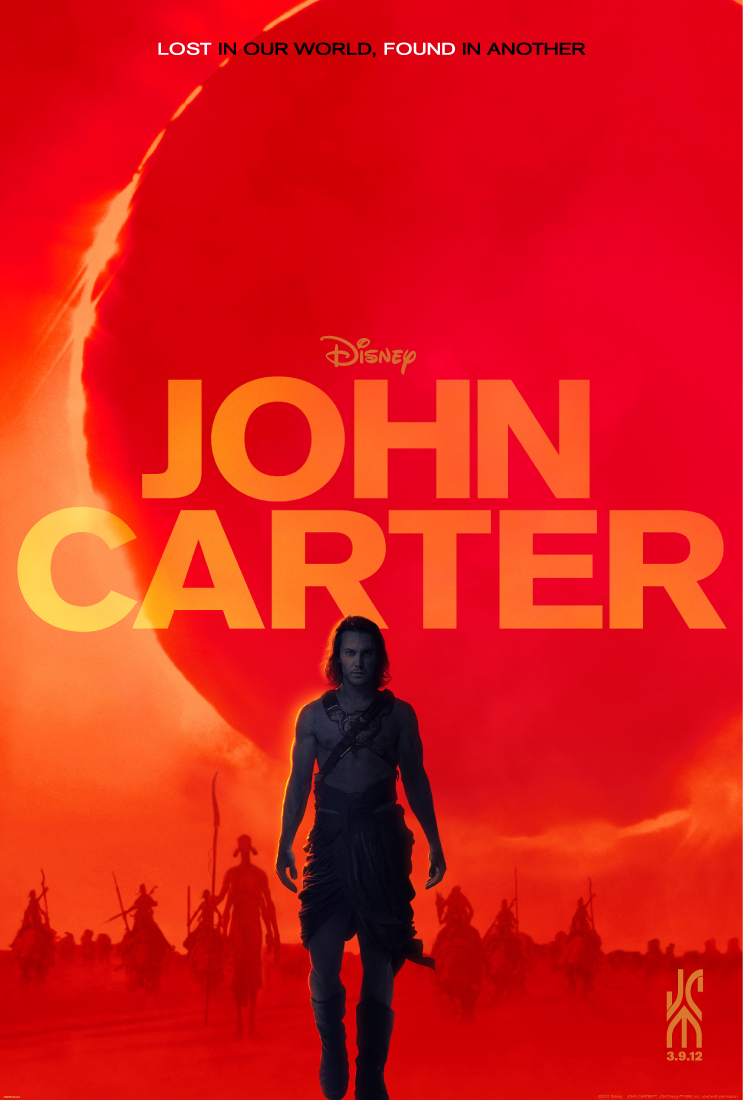 VERDICT:
4/10 Universal Soldiers
White men can jump, but that’s about it.
John Carter is about highly decorated Civil War greycoat who abandons his post to search for gold. Begrudgingly, he gets roped back into serving his country, nearly gets scalped in the process, and through a bizarre series of otherworldly events, finds his gold and gets transported to Mars. As it turns out, 19th Century Mars is a far cry from modern-day Mars. There’s oxygen everywhere, it’s inhabited by giant green men, and thanks to the changes in gravity and such, our Earth man can now punch like Mack truck and leap tall buildings in a single bound. Shortly after arriving, he gets himself captured by these giant green men. Despite being a prisoner, he proves himself worthy and in turns becomes a high-ranking member of the tribe. Then he gets caught in a battle between the giant green men and an army of Martians who look a lot like we do, and ends up saving the life of a Martian princess. Long story short, everyone on Mars is pretty much at war with each other, and so it’s up to John Carter to keep the princess safe and bring peace to the planet through the power of friendship and jumping. Especially jumping. Martians love that shit.
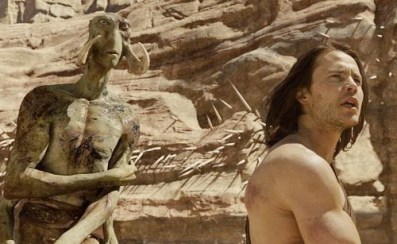
Now, this was an unusual experience for me. I’m the kind of person whose entire reading list is dictated by the adaptations hitting theaters. I like reading, I like movies, just seems to make sense, right? However, Edgar Rice Burroughs’ A Princess of Mars didn’t quite strike me as required reading, and never having heard of it before, I figured the movie alone would suffice. But then a funny thing happened. I watched the movie, wallowed in my dissatisfaction for a few minutes, then peeled on out to Barnes & Noble. Never before has that happened, and never before has a movie compelled me to read its inspiration after the fact. Didn’t make much difference in terms of my prior reaction to the movie, but being a much better read than the movie was a watch, it made the adaptation’s errors that much easier to pinpoint.
The best way I can sum up what went wrong with John Carter is that it’s a lot like Star Wars: Episode I. For those who remember and for those who don’t, the excitement leading up to the summer of ’99 was dare I say unparalleled. It was the origin story of Darth Vader, it had been 16 years in the making, and it was going to be awesome. After all, it was Star Wars. How couldn’t it be awesome? Lo and behold: fuck Episode I. Yes, that movie has a veritable rap sheet of criminal charges going for it, but to me, it all boils down to one thing: we could have gotten a Star Wars movie, but instead, we got a children’s movie. Not that I was betting on John Carter being the next Star Wars, but after first seeing its phenomenal trailer more than a year ago, I can’t say it didn’t look awesome. And while it doesn’t delve into Jar-Jar territory, it is nonetheless a disappointing exercise in unnecessarily overcomplicating some things and oversimplifying others.

Good lord, just look at that synopsis up there. It’s ridiculous how long that synopsis is. I almost feel like apologizing, but what’s worse is that I probably could have kept going for another paragraph. Although, in its defense, the plot of the movie does mirror the plot of the novel pretty closely, and the issue isn’t so much what’s been left out as it is what’s been added/how it’s all presented.
As for what shouldn’t have been added, Mark Strong’s character is a good place to start. Mark Strong plays this guy named Matai Shang who’s more or less a cosmic god of sorts. He holds the power, he’s the reason everyone’s at war, and he doesn’t take too kindly to John Carter’s meddling. Aside from the fact that his presence and powers raise a bunch of seemingly important questions that kinda sorta get answered (eg: could anyone really explain what the Ninth Ray was after seeing this?), the motives behind his actions are more or less non-existent. The best explanation I’ve got is that the guy’s on a power trip, the size of which is so epic that us Earthlings couldn’t even begin to understand. But by and large, there is no explanation, not even Even when John Carter asks the guy what his motives are and Shang basically answers: “Because I’m older than you. Now go to your room.”
Folks, that whole “grand design” shit is no bueno as far as villainy goes, and everything would have gone a lot smoother for all of us if he just hadn’t been around. It’s complicated enough trying to make heads or tails out of all the warring tribes here, the last thing we needed was a member of The Future Council getting on the stage to bogart the mic for no reason. Dude was barely a side character in the book. Insult to injury, man.
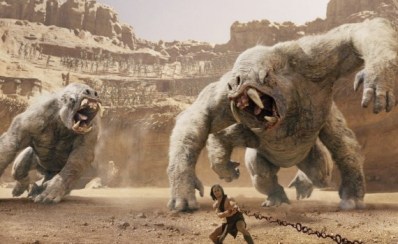
And as for how it’s all presented, the novel is a good place to start. As told by Edgar Rice Burroughs, the story of John Carter is one of maturity, insight, and, at times, graphic violence. And in addition to the excitement of its adventures, it’s ultimately a story about understanding and the extraordinary qualities that make us human. As told by Andrew Stanton, Michael Chabon, and Mark Andrews, the story of John Carter is essentially Gladiator in space with just enough juvenile humor thrown in so that you don’t forget it’s from Disney. So thanks for nothing, Disney. You are a jerk.
And then there’s John Carter himself – once written as an intelligent, thoughtful individual who’s as eloquent with his words as he is with a sword. Now, he’s written as the redheaded stepchild of Snake Plissken and Josey Wales. All he cares about is his cave of gold, he speaks like an uneducated weightlifter who was never treated for asthma, and he has about as much conviction as a mercenary in wartime. Granted, some of this is due to the miscasting of Taylor Kitsch who only serves to accentuate everything about his character that’s already been overdone. Plus, he looks awful in a beard. Still, it is the bastardization of John Carter that truly sums up this misguided script.
But the thing is, you don’t need to read up to notice every last one of these shortcomings. Because it caters to a younger audience by dumbing down its characters, and because it simply doesn’t know what story it wants to tell, it only becomes more muddled with time. While it’s nevertheless astounding how much violence you can get away with when your characters bleed blue, this is an adult tale that’s been hobbled down to a PG-13 rating. As a result, kids will laugh their asses off, and grown-ups will cringe throughout. Sons will be too hung up on the action to follow the story, fathers will be too confused to enjoy it properly. Mothers and daughters are smarter, so they’ll avoid the movie entirely.

It’s thoroughly aggravating the way this movie jumps from one extreme target audience to another while not hitting home for either. Also seems like a waste to have Willem Dafoe, Samantha Morton, and Thomas Haden Church all playing big green aliens. You don’t put a cast like that in mocap suits. Way to squander your talent, Disney. God, you’re such a jerk.
It’s actually kind of sad that this is the way things turned out for John Carter. Sure, I wasn’t crazy about it, but the potential was there. Believe me, I wouldn’t have read the book if it wasn’t. It’s a good story, albeit poorly told, and it could have been so much better with just a few more focused rewrites. And I hope this didn’t come off as a “book vs. movie” review, because the downfall of John Carter isn’t that it deviates from the strengths of the source material, but that it doesn’t know what it wants to be in the first place. The silver lining is that it’s generally gorgeous to watch, and I’m guessing would be far more enjoyable after a nice hefty dose of peyote. Then again, is that really how you want to spend 132 minutes of your day/high? Hell to the no, hippies.
Hell to the no.
BEST MOVIE EVER – Episode 5: Zen and the Art of Celebrity Sightings

Happy Tuesday, everybody!
Apologies for the delay on this one, but it’s not every weekend that you go to a wedding on your birthday, and as a result, productivity was not on the menu. Still, better late than never, right? So without further ado, hit the jump to hear Sean and I ramble about the new seasons of The Walking Dead and Bob’s Burgers, our favorite celebrity run-ins, and our picks for the Best Book-to-Movie Adaptation Ever. Thanks for listening and continue being awesome.
BEST MOVIE EVER – Episode 5: Zen and the Art of Celebrity Sightings
MAY I HAVE YOUR ATTENTION, PLEASE!
Well, hey there! Happy Friday, folks!
Now, I know what you’re thinking: “This here’s one awfully short review. Wait…why, this isn’t a review at all! We’ve been duped!” I know, and I apologize profusely for the disappointment. But there’s good reason for this here change of scenery, and that’s ’cause I’ve been hard at work, boys and girls. On what, you may ask? Well, something that I hope will come in handy. Would really appreciate you checking it out and letting me know what you think, so what are you waiting for? Click on through and see for yourselves…

Hope you enjoy, because we’ve all been there.
Something from Nothing: The Art of Rap (2012)
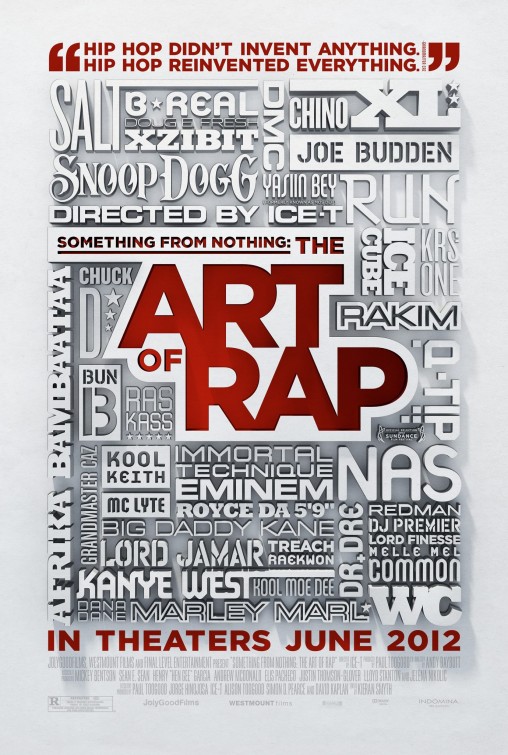 VERDICT:
9/10 Aural Histories
One of the more important docs about music you’ll likely ever see.
Something from Nothing: The Art of Rap is a documentary by Ice-T about the craft of his craft: hip-hop. From the East coast of New York to the West coast of LA, he interviews just about every emcee you can imagine to hear why hip-hop matters and why hip-hop matters to them. Then he has them freestyle into the camera, and it is awesome.
So being that I’m a white guy who grew up in the suburbs of New York, it should come as no surprise that I also like hip-hop. If for some reason that doesn’t make sense, go to a rap concert and check out the crowd. I rest my case. But it wasn’t always that way, as there was actually a long period of my youth when I loathed the stuff. Not to mention that even if I did like it, there was no way in hell my folks would ever let me own an album with “PARENTAL ADVISORY” on the cover. Anyway, that’s neither here nor there. I’m over it now. I wish I had a more concrete explanation as to why I didn’t like hip-hop, but when you’re a kid, you don’t need to explain yourself on these matters. I didn’t “get it,” and that was good enough. Little Aiden was all about the Spin Doctors, baby.

This went on for a while, and it wasn’t until I started going to high school in the Bronx that all that changed. Just like that, I was inundated with the stuff, and no matter how hard I tried, it was simply inescapable. I had suddenly become the musical minority, and I was left with two options: A) Try giving hip-hop a fair shake because there’s no use resisting it; or, B) Try getting your new classmates into Nine Inch Nails. I actually tried option B one time. It did not go well. And so here I am, 12 years later still sitting at my computer trying to learn the words to “Children’s Story.”
But by the same token, it’s been a long-ass time since I’ve bought a hip-hop album. Maybe Tha Carter III four years ago, but that’s about it. The reason being is that I feel hip-hop has changed a lot from what it once was to what it is today. Now, I like hip-hop, but I don’t claim to be an authority on the game in any way, shape, or form. Still, the music that has always resonated with me, especially when it comes to this particular genre, was the music that actually meant something. Go listen to Biggie talk about how “Things Done Changed,” or Wu-Tang’s struggles to get by when cash ruled everything around them. On top of having fantastic beats to work with, the artists who got me into hip-hop were the ones who had something to say and used the mic as a soapbox to say it.
Not to say those artist are extinct, and for every awful band that floods the airwaves there will always a great band to even things out (write that one down kids), but I feel like it’s been a while since I’ve heard those artists on the radio. I know they’re out there, I think I just need some guidance to find ’em. Still, these days, I feel like I’m part of my grandparents’ generation, the ones who hear clicks and whistles every time the dial makes its way to HOT 97. These days, I feel like you need a bare minimum of talent to have a hit record on the hip-hop charts, so long as folks dance to it and you’re cool with getting auto-tuned. These days, I feel like its more about the lifestyle than the music. These days, I long for the old days. Woe is me, I know.
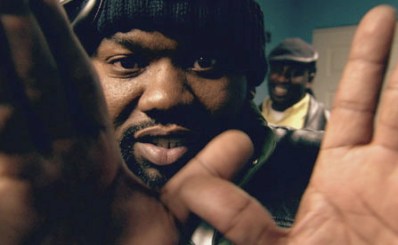
But I don’t think I’m alone on this one. I think there are a lot of people who feel like this and have always felt like this for that matter – that, to an extreme, hip-hop is nothing more than a bunch of foul-mouthed fools who don’t play instruments. Even if you don’t feel that way, haters gonna hate, and in semi-defense of those haters, the hip-hop game has done a bang-up job of earning its criticisms over the years.
And that’s what I think is gonna make or break this movie for a lot of people: the mindset they’re going in with. And since there’s nothing all that technically impressive about it, the lasting impression is really dependent on the expectations it defies. If the interest isn’t there and the mind isn’t open, fat chance they’ll stick around when Grandmaster Caz starts freestyling with the N-word like it’s a makeshift comma. But if the interest is there, even in the slightest, there’s a lot to be learned.
Aside from all the positive reviews this movie got, the thing that first caught my attention was all those names on the poster. Man, when Ice-T makes connections, Ice-T makes connections. Save for The Beastie Boys, 2Pac, and Biggie, this dude talks to freakin’ everyone. A lot of them were familiar, some of them were brand new, but then again, how familiar can you really be with someone just by memorizing the lyrics? Turns out, not very.
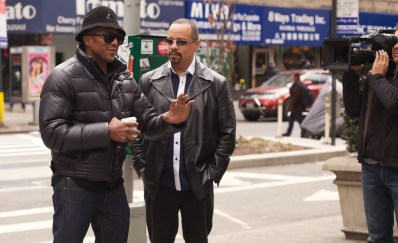
And as an interviewer, Ice-T’s actually pretty solid. Was fully prepared to hear him ask the same set of questions ad nauseum for two hours, but instead he does a swell job of tailoring the questions so that they pertain to who he’s interviewing and what makes them unique. And even on the few occasions when he does ask the same question, he always gets a very different answer that’s even more insightful than the last one. But as you can probably guess from the synopsis up there, Ice-T’s working with a pretty simple formula here. Ask a couple questions, cue the freestyling, switch to some B-roll of NYC or LA (maybe throw in a voice-over if he’s feeling feisty), then move it on over to the next rapper. On second thought, this is a ridiculously simple formula, one that probably shouldn’t work as well as it does. But it does work. It works like gangbusters in fact.
There are a couple reasons for why that is, the first of which goes back to that whole “clicks and whistles” comment. Despite how many times they do it and how long some of them do it for, watching and listening to these guys freestyle is just mind-bogglingly impressive. It never gets old, not even once, and it is amazing watching them think up these outrageously intelligent rhymes on the fly and then string them all together without skipping a beat. This alone will give you a whole new appreciation for the gifts these men and women have, gifts that they’ve clearly honed to perfection. Just wait to ’til you get to Joe Budden’s segment. Ree-diculous.
The second reason is how incredibly well-spoken and thoughtful these individuals are in creating a conversation. From the origins of battling to the many different ways that they go about creating their rhymes, their words and their creative processes are not only fascinating to soak up, but they completely betray the “money, cash, hoes” mentality that keeps their art form operating on such a base level at times. This, more than anything, is what elevates The Art of Rap to something truly special. Like I said, there’s only so much you can learn about someone from what they say on a record, and if that’s all you’ve got to go on, you’re shortchanging them and you’re shortchanging yourself. Just look at Eminem, perfect example of someone who worked their way up to “grandmaster” status and matured exponentially in the process. Make no mistake, these are fresh, original, skilled artists who work just as hard at their craft as any other musician, and they deserve to be taken just as seriously.
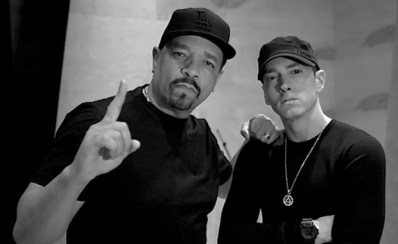
On top that, they’ve all got so much love and respect for one another. Maybe that’s just the magic power of Ice-T, but for a genre that’s been rife with conflict, rivalries, and bloodshed over the years, it’s wonderful to see everyone so congenial and familial over a subject that’s both united and divided them at times. All that East coast/West coast shit? Non-existent. It’s like they’re all this together, and that right there’s a beautiful thing.
Still, not everyone out there likes hip-hop, and that’s cool if they don’t. Might prevent a good deal of folks from giving this a chance, but the great thing about The Art of Rap is that it isn’t a popularity contest. It’s not out to convert anyone, it’s not trying to make friends. The Art of Rap is a matter of respect. Respect for an art form that’s just that. For all its accomplishments and everything it reinvented, hip-hop has never really gotten its due in ways that other, older genres have. It’s a shame, and when you see what its innovators are capable of, you’ll be echoing that very sentiment. All in all, there has never been a more effective movie in terms of dispelling the preconceptions of this art form and those who’ve made it what it is today. Not sure if it’s the best way to introduce someone to hip-hop, but it’s one hell of an education all the same.
And what a sweet poster, huh?
The Woman in Black (2012)
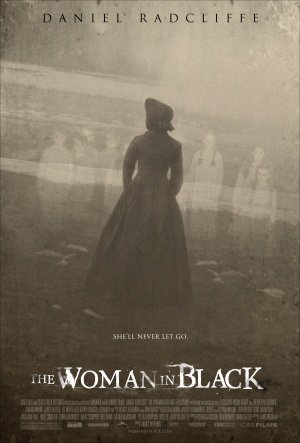 VERDICT:
3/10 Village Idiots
How many times are we gonna hear this freaking story already?
The Woman in Black is about a young lawyer from ye olde England who sets out for the country to settle the affairs of a recently deceased woman. He rolls up to town, asks for a room, and is greeted with a royally cold shoulder from everyone he meets. They hide their kids, they hide their wives, because Daniel Radcliffe be unintentionally dooming everyone up in there. But for some reason, no one clues this lawyer into why they don’t want him around. Apparently, the late broad whose house he’s going to visit is largely thought to be the reason there are so many dead kids in town. So totally aloof as to his situation, he heads off to his client’s abode with the help of a kindly fellow he met on the train. He settles in, completely ignores all the creepy shit littering the mansion, and as he begins to dig up this lady’s shady past, it isn’t long before he realizes why everyone’s been such a dick to him lately.
Now, I was actually looking forward to this movie. Not because it was Radcliffe’s first role post-Harry Potter, and not because I was hoping it would reinvent the genre or anything. The only cause for excitement here was due to an absolutely phenomenal trailer that scared the goo right out of me and everyone else who saw it (see below…IF YOU DARE). As if my embarrassing fear of dolls wasn’t bad enough already, it convinced me that its been-there-done-that premise was anything but, it made me forget about how disappointing The Strangers ended up being despite its brilliant trailer – a lesson I thought I’d never forget. Despite my better judgment, I was hook, line, and sinker. But as much as I can ramble about everything it did wrong, I have no one to blame but myself. Fool me twice, right?
All the same, still gonna ramble.
The fact of the matter is that The Woman in Black gives us nothing that we haven’t seen before and instead borrows heavily from movies that people really need to stop borrowing from. For example, the first half of the movie is essentially a British version of The Grudge. It starts the exact same way with someone launching themselves out a window for no apparent reason, then shifts to the viewpoint of our protagonist who’s already on their way to investigate the cause even though they don’t know it yet. Everything’s cool until they show up to a haunted house, and, by their mere presence, awaken a dormant spirit that starts offing folks left and right. Once that’s all settled, the film makers remember that The Grudge was actually a rip-off of The Ring, and so they shift their focus to jacking that movie right up until the very end. If you’ve seen The Ring, you know where this is going. If you haven’t seen The Ring, watch that instead of this. You’re welcome.
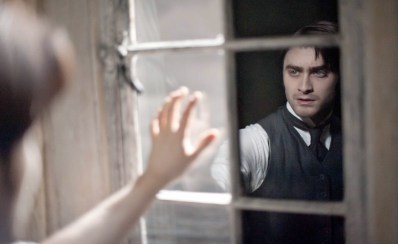
Anyhow, this turning point from The Grudge to The Ring is where things get infuriating.
Now, Daniel Radcliffe spends all of two nights at the said haunted mansion. The first night is spent tooling around for a few hours before hitting the sack in town, the second night he actually decides to sleep there on his own free will. The driving force behind this ridiculous decision is that Radcliffe is hard up for cash and needs to get this lady’s estate taken care of so that he can keep his job at the law firm. He does have reason to stick it out, but by the same token, self preservation takes precedence in these matters, and no one in their right mind would ever go back to that house, let alone spend the freakin’ night, after the unexplainable crap that this guy witnesses on his first visit.
Nevertheless, he does stay the second night, and as is a rule in horror movies, this idiotic decision warrants death. Rather than listening to the advice of everyone around him by taking the midnight train back to London, he proceeds to investigate the mansion and acts like it’s perfectly normal for rocking chairs to rock violently when no one’s sitting in them. Probably happened all the time back then. And on that note, there is nothing subtle about how clearly haunted his new abode is. Screw tricks of the eye or imagining things, this is some Zuul shit we’re talking about. Plus, there is no real explanation or justification for why he opts to help The Woman in Black rather than burn her house down and find a new job. It is one red flag after another, he has the complete opposite reaction to them as every human being would, and you’ll spend the rest of the movie rolling your eyes and yelling at the screen as a result.
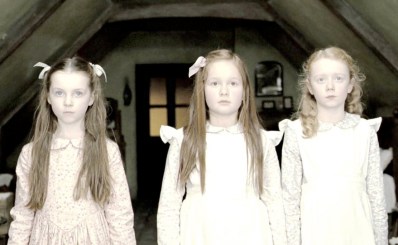
On top of all that nonsense, it makes zero sense that no one in town would tell him outright why they don’t want him there or what might happen if he stays. Just tap him on the shoulder, buy him a cold one, and say, “Dude, I know you’ve got a job to do and everything, but this house you’re going to, that shit is haunted by one seriously bad bitch. Sounds crazy, I know, but here’s the 411…” Easy peasy Japanesey. At worst, you risk sounding like a loon, but it just might save your kid from dying. At best, everyone else in town echoes your opinion, Daniel Radcliffe goes home, and you’re not only doing him a favor, but guaranteeing that everyone’s kids stop dying. I can’t be the only person who came to this conclusion. Everyone in this movie kind of sucks.
I mean, is it really that hard to write a horror movie where people behave like people? Is that really so much to ask? Serenity now, man.
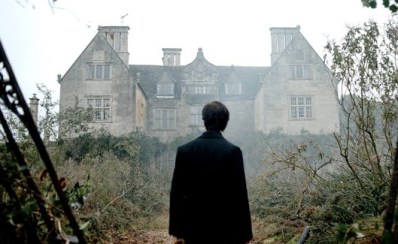
Although if there is a saving grace to this movie, it’s that it looks absolutely gorgeous. The scenery and locations, inside and out, are absolutely top-notch, and the faded color tones throughout do a spectacular job of setting the mood. And it really is too bad that I can’t bring myself to give this a higher Verdict if only for this very reason. Then again, just because someone looks like a goddamn supermodel doesn’t mean I’ll stand by and let them yell “BOO!” at me from behind a corner for 95 minutes. Nothing is that pretty, not even Daniel Radcliffe.
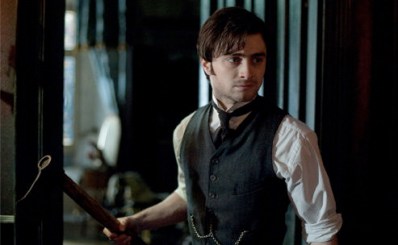
Aside from the visuals, The Woman in Black isn’t entirely ineffective as it does have some cheap scares going for it. Nothing you won’t see coming, but enough to induce a fear snuggle from your date. If that’s what you’re looking for, you won’t be disappointed. But if you were just as duped by that trailer as I was, you’re in for a rude awakening, friend. As I said, it’s my own damn fault for getting my hopes so high, and that certainly played a factor. Still, it’s been a pretty underwhelming year for horror movies thus far, and this ain’t helping matters any.
What a totally garbage ending, too.
The Perks of Being a Wallflower (2012)
 VERDICT:
8/10 Infinite Wisdoms
About as good a transfer as a groupie could ask for.
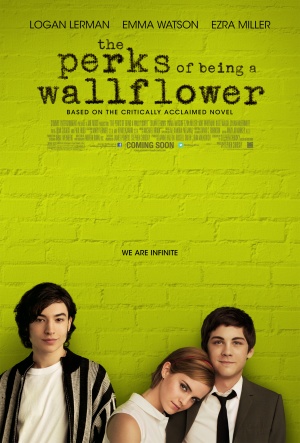
The Perks of Being a Wallflower is about an introverted, endearing kid named Charlie on his first day of high school. Devoid of friends and out of place, he’s eventually taken under the wing of two seniors who introduce him to their “island of misfit toys.” As the year goes on, he comes to belong and begins to find himself while navigating new emotions and dealing with his own repressed demons along the way. Then love and college get thrown into the mix, and things don’t get any simpler.
Before we go any further, allow me to make this perfectly crystal: if you haven’t read The Perks of Being a Wallflower, you should really read The Perks of Being a Wallflower. I read a lot, and of all the coming-of-age novels I’ve perused in my day, The Catcher in the Rye is probably the only other one that bore as much of an impact on me as this did. It’s just rare to find a book that so accurately and honestly captures the complexities of growing up, complexities that still resonate with us even as we grow up and forget about them. Plus, it’s a super quick read at only 250-something pages. Points being: A) You’re out of excuses; and, B) Expectations were high.
However, as much as I adore the book, I never really imagined it as a movie. Given that it’s one of those books where teens drink brandy, eat magic brownies, swear, and have sex like teens do (shocking, I know), it’s also a book that’s been banned quite a bit by uptight school boards and the like. And not surprisingly, those are some of the very aspects that make the book so special: the ones that parents try to fool themselves into believing aren’t happening while their kids are out there doing them. Except for me, mom. I was an angel.

And more than anything, that’s why it’s so surprising to me that this movie ever got green lit. The Perks of Being a Wallflower has a very loyal following, a good deal of which are likely 16-years-old and under. But I always thought that if a movie were to do it justice, it would have to be rated R, thus cutting out a large chunk of the target audience. I’m no Hollywood fat cat, but that’s no bueno as far as turning a profit is concerned.
Or so I thought.
While I do wish more movies (including this one) would let kids swear like they did in the glory days of Stand By Me and The Breakfast Club, it was a big relief to see how true this PG-13 adaptation stayed to the source material without sugarcoating things along the way. Everything I mentioned up there totally happens in the movie, it just doesn’t make such a big deal out of it, which is how it should be anyway. So my biggest fear was put to rest, but after all, when the writer/director is the same guy who wrote the novel, you’re certainly off to a good start.
The fact that Stephen Chbosky was given so much responsibility and creative control over this movie – despite what little experience in the industry he had – really shows a lot of respect for both the source material and entrusting it to someone who’d know how to approach it. And though a more experienced writer could have put together a first Act that didn’t feel so forced at times, and a more experienced director could have slowed down the pacing a bit so that it didn’t feel so rushed at times, it’s hard to imagine anyone else but Chbosky behind the wheel. Faults and all, this is his baby, one that he cares about just as much as his fans.
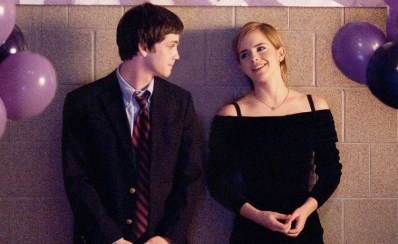
And as a result, the important stuff – the heart – is all there: the soundtrack to Charlie’s life, the sage insights that everyone deserves to hear at some point in their lives, the amazing/awkward/heartwarming/confusing/hilarious/tragic moments that drove each chapter of the novel and made me empathize with Charlie in ways I never had with a character. Some of the dialogue doesn’t roll off the tongue as well is does on paper, but that small complaint aside, this is very much the Perks I know and love revisiting. Granted, there are some liberties taken along the way, mainly in terms of certain things that Charlie does or doesn’t go through with. This can usually go either way, but it absolutely worked this time. It felt more like Chbosky giving Charlie a Mulligan rather than Chbosky telling a different story altogether. As a fan of Charlie, and as a fan of Mulligans, I very much dug that about this script.
But the double-edged sword of loving a book this much is that it’s hard to imagine the characters as anyone other than the ones you’ve already envisioned. For example: Ezra Miller. If you’ve seen We Need to Talk About Kevin, chances are you will always see Ezra Miller as that nail-biting teenage sociopath who made Tilda Swinton’s life a living hell from infancy onwward. Here, he plays Patrick: Charlie’s gay friend with a lust for life who plays Dr. Frank-N-Furter at the Rocky Horror screening every Saturday night. Now, I always imagined someone grungier than Emma Watson as Sam, and Logan Lerman struck me as a bit too old and kempt to play Charlie, but hey, at least they weren’t the seed of Charlie Manson.

Oh yes, I was skeptical. But lo and behold, Ezra Miller turns out to be the best addition to the cast, and within minutes made me forget all about his archery days. Quite the successful transition, and one that I think a lot of seasoned actors tend to have trouble with. Watson is also quite good as Sam, and though the transformation doesn’t occur as organically as it does for Miller, Lerman does do a swell job of bringing Charlie to life. There’s also a bunch of other familiar faces in here, too many to run down without sounding like roll call, although there is one that’s absolutely worth mentioning.
Folks, it is so-effing-good to see Paul Rudd playing someone other than Paul Rudd for maybe the first time in his career.
The upside is that he tones things down and downplays his performance as Charlie’s English teacher, Mr. Anderson, and he ends up being a really good fit in turn. It’s not a career-changer by any means, it’s just incredibly refreshing for a dude who could not be more comfortably typecast. But one of the biggest downsides of the whole damn movie is that there isn’t enough of him to go around. Now, I’m not gonna throw a fit over the best scenes in the book that were left out of the movie, because a lot of them are actually here, but I will say I’m disappointed that one in particular is missing. The relationship between Charlie and his teacher is, to me, one of the most moving and poignant relationships that Charlie builds throughout the novel. Not to say that their relationship isn’t important here, but it could have been more, and it could have led to my favorite scene from the entire book.

Not a dealbreaker, just disappointing, I guess. Can’t win ’em all, kids.
Anyhow, I’d be really interested to see how the uninitiated take to this movie, because as you might have picked up, I had quite the bias going in. But as a proud member of the club, I was awfully satisfied with the tall order that Perks filled. Sure, it still pales in comparison to the novel, plus it takes a good half-hour to catch its stride and start feeling familiar, but when there’s such a clear respect for the source material as there is with this, it really makes all the difference. And at the end of the day, it’s just great to see this important, timeless story get a fair shake. Hopefully it will compel a whole new generation of non-readers to pick up the book and keep the cycle going, but even if it doesn’t, it’s a story worth hearing regardless of medium. Us wallflowers ain’t alone.
And more movies really need to make better use of David Bowie’s “Heroes.” That Wallflowers cover ain’t got a damn thing on the original.






 Cut The Crap Movie Reviews